

Work hours in NYC renovations are the single most controllable factor determining whether your project finishes on time and on budget. Every building in New York City operates under a combination of city law and internal house rules that define exactly when contractors can work, make noise, and use the freight elevator. Ignore those windows and you face fines, stop-work orders, and weeks of added delay. Understanding why work hours matter in any NYC renovation is not optional knowledge. It is the foundation of a realistic schedule, a reliable budget, and a stress-free project.
Why work hours matter in NYC renovation planning
Construction work hours in NYC are governed by two separate layers of rules. The first is city law. NYC noise regulations prohibit noisy building work outside of 7 AM to 6 PM on weekdays. Violations can result in fines and stop-work orders that halt progress entirely. That is the legal floor. The second layer is your building’s house rules, which are often stricter.
Most NYC residential buildings restrict work to weekdays between 8 AM and 5 PM or 9 AM and 5 PM, with rare allowances for Saturdays and almost never Sundays. That means your contractor may have as few as seven or eight productive hours per day. Subtract time for setup, cleanup, and material deliveries, and the actual working window shrinks further.
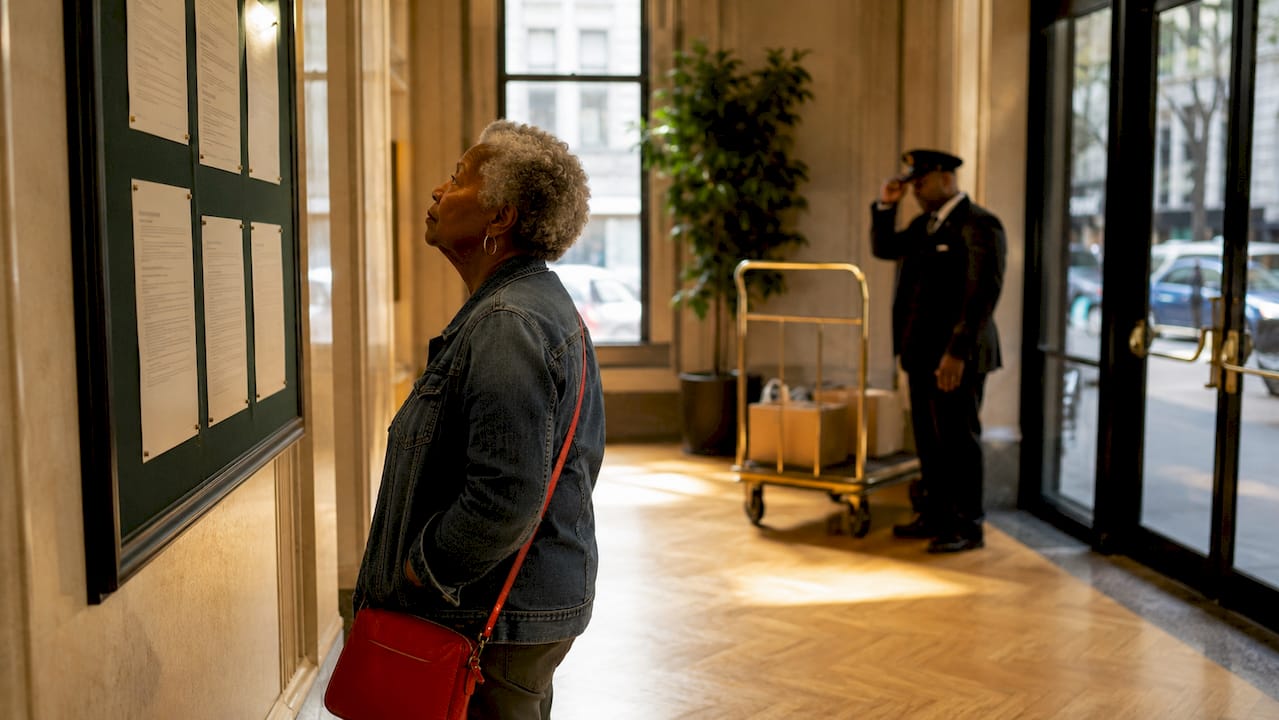
These restrictions are not suggestions. Architect Sokol Binakaj states directly that building house rules carry legal weight and that failing to understand them causes costly project stalls and budget overruns. That perspective comes from real project experience, not theory.
What are the typical work hour restrictions in NYC residential buildings?
Work hour rules vary by building type, and the differences matter.
- Co-ops tend to have the most restrictive house rules. Many limit work to 9 AM to 5 PM weekdays, require board approval for contractors, and prohibit any work on holidays.
- Condos are generally more flexible but still impose weekday-only windows and require advance notice to building management.
- Rental buildings follow the city’s legal minimums unless the landlord has added stricter internal policies.
- Landmarked buildings may layer on additional restrictions tied to Landmarks Preservation Commission approvals.
Weekend work is the most common source of conflict. Most buildings prohibit Saturday work entirely or allow it only until noon. Sunday work is almost universally banned in residential buildings across Manhattan, Brooklyn, and Queens.
The consequences of violating these rules are serious. Building management can issue a stop-work notice that shuts down your project immediately. The city can issue fines. Your contractor may lose approval to work in the building at all. A single violation can add weeks to your renovation work timeline while you resolve the dispute and reschedule trades.
Pro Tip: Request a copy of your building’s house rules before you sign any contractor agreement. Review the work hours section, the elevator access schedule, and the contractor approval process. Do this before you finalize your renovation schedule, not after.
How do work hours impact renovation timelines and budgets in NYC?
Restricted work windows directly extend how long your project takes. A contractor working 9 AM to 5 PM in a co-op has roughly eight hours per day. Subtract time for setup, material staging, and end-of-day cleanup, and productive output drops to six hours or fewer. Research confirms that most productive renovation workdays are 6 to 8 hours long, and that working beyond that reduces output quality despite the extra time. Tight building windows actually align with peak productivity, but they leave no room for delays.
The budget impact is equally direct. When a project runs long because of restricted hours, labor costs accumulate. Contractors who need to return for additional days charge for that time. Specialty trades like plumbers and electricians often bill by the day, not the hour. A project that could finish in four weeks under flexible conditions can stretch to eight weeks under strict building rules.
| Scenario | Estimated Timeline | Key Risk |
|---|---|---|
| Flexible hours, no building restrictions | 4–6 weeks | Low |
| Standard co-op rules, 9 AM to 5 PM weekdays | 7–10 weeks | Moderate |
| Strict rules plus elevator conflicts | 10–16 weeks | High |
| Violations causing stop-work order | Indefinite delay | Critical |
Elevator access is a hidden timeline killer. Many NYC buildings restrict freight elevator use to specific windows, sometimes just two hours in the morning and two in the afternoon. If your contractor cannot move materials up on schedule, the entire day’s work stalls. A missed detail on elevator timing can add weeks to a project and increase the disruption you experience while living through the renovation.
Pro Tip: Ask your building’s superintendent for the freight elevator schedule before your project starts. Build those windows directly into your contractor’s daily plan so material deliveries never compete with other residents.
Why understanding your building’s house rules is critical
House rules are legal documents. They are part of the proprietary lease in a co-op or the bylaws in a condo, and they bind you as the owner or renter. Ignoring them does not make them optional. It makes you liable.
Common work hour clauses in house rules include:
- Specific start and end times for noisy work
- Separate quieter work windows for tasks like painting or finish carpentry
- Required notice periods before work begins, often 48 to 72 hours
- Contractor registration requirements with building management
- Insurance minimums that contractors must meet before entering the building
One real example illustrates the cost of overlooking these details. One NYC project experienced a three-week delay because the plumber on the job was not on the building’s approved contractor list. The list had not been updated in two years, and no one checked it before work began. Three weeks of lost time, plus the cost of rescheduling every trade that followed the plumber.
“Managing work windows around building rules is the difference between a six-week and a four-month renovation project.” — Architect Sokol Binakaj
Contractor registration is the step most homeowners skip. Buildings require contractors to submit proof of insurance, a license, and sometimes a signed agreement to follow house rules before they can enter. If your contractor is not registered, they cannot legally work in the building. Checking this before your project starts takes one phone call to the building manager. Fixing it after work has already been scheduled can take weeks.
For co-op renovations specifically, the approval process is even more layered. A step-by-step co-op renovation guide covers the full sequence of board approvals, alteration agreements, and house rule compliance that co-op owners must navigate before a single contractor sets foot in the apartment.
How to plan and schedule your renovation around NYC work hour rules
Effective scheduling starts before you hire anyone. The goal is to build your NYC renovation schedule around the building’s rules, not the other way around.
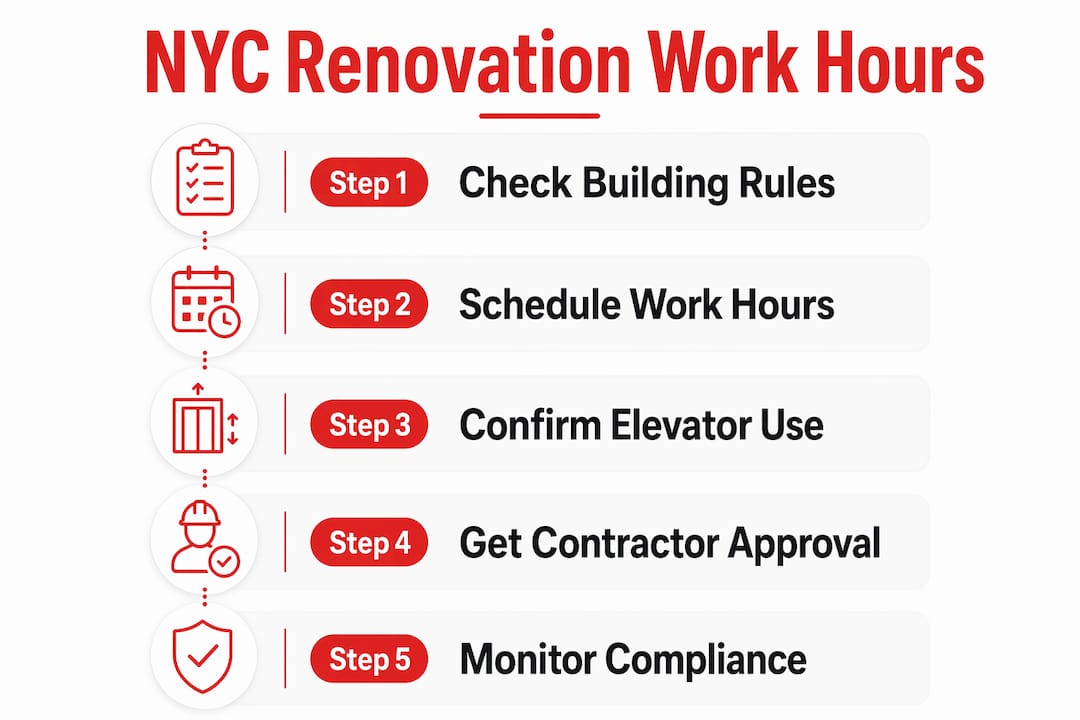
Request house rules and the alteration agreement from your building management. Read both documents fully. Note the permitted work hours, elevator schedule, contractor registration requirements, and any noise restrictions specific to your building.
Hire contractors with direct NYC residential experience. Contractors who know NYC regulations build compliant schedules automatically. They know which trades need to be sequenced within tight windows and how to avoid elevator conflicts. Contractors without this experience often underestimate how much building rules will slow them down.
Build a milestone schedule that maps to allowed hours. Break your project into phases: demolition, rough work, inspections, finish work. Assign each phase a realistic duration based on the actual daily work window, not a best-case scenario. Track your renovation project milestones against the schedule weekly.
Communicate with your neighbors before work begins. Give adjacent units advance notice of your start date and expected duration. This reduces complaints to building management and keeps your project from becoming a building relations problem.
Build contingency time into every phase. NYC renovations face delays from inspections, material lead times, and building logistics. A 10 to 15 percent buffer on your timeline is not pessimism. It is accurate planning.
Regulatory influence on work hours in NYC construction is the primary driver of how many hours contractors can log per day. Understanding that reality up front lets you plan a schedule that holds.
Key Takeaways
Work hours in NYC renovations directly control your timeline, your budget, and your compliance with both city law and building rules. Ignoring them is the most common and most costly mistake NYC homeowners make.
| Point | Details |
|---|---|
| City law sets the floor | NYC prohibits noisy work outside 7 AM to 6 PM weekdays; violations trigger fines and stop-work orders. |
| Building rules are often stricter | Most co-ops and condos limit work to 9 AM to 5 PM weekdays; weekend work is rarely allowed. |
| Restricted hours extend timelines | Projects under strict building rules can take two to four times longer than those with flexible schedules. |
| Elevator access is a hidden risk | Missed freight elevator windows stall entire workdays and add weeks to the project. |
| Early research prevents delays | Reading house rules and registering contractors before work begins is the single best way to protect your schedule. |
What we have learned from managing NYC renovation schedules
We have managed renovations across Manhattan, Brooklyn, and Queens, and the pattern is consistent. The projects that run smoothly are the ones where the homeowner read their house rules before the first contractor walked in. The projects that spiral into overruns almost always trace back to one overlooked detail: a work hour window that was tighter than expected, a contractor who was not registered with the building, or a freight elevator that was only available for two hours a day.
The uncomfortable truth is that most renovation stress is preventable. NYC building rules are not designed to make your life harder. They exist to protect every resident in the building, including you. When you treat those rules as part of your project plan rather than obstacles to work around, everything runs cleaner.
We also see homeowners underestimate how much the work hour window affects cost. A contractor who can only bill seven hours a day in a building with strict rules will take longer to finish. That extra time costs money, whether it shows up in daily labor rates or in the extended disruption to your home. Budget for the real timeline, not the ideal one.
The best advice we can give is to start with the rules, not the design. Know your building’s work hour policy before you finalize your scope. Then hire a contractor who has worked in buildings like yours before. That combination, clear rules plus experienced execution, is what separates a six-week renovation from a four-month ordeal.
— D&J
Work smarter on your NYC renovation with Designsbydandj

Designsbydandj is a family-owned design-build firm in NYC that manages every phase of your renovation, from reading your building’s house rules to coordinating contractor schedules within permitted work windows. We know how NYC buildings operate, and we build that knowledge into every project plan from day one. You get a clear timeline, honest cost estimates, and a team that communicates with your building management so you do not have to. If you are planning a renovation and want a process that accounts for NYC’s real constraints, reach out to Designsbydandj for a consultation. We make the process feel organized, not overwhelming.
FAQ
What are the legal construction hours in NYC?
NYC law prohibits noisy construction work outside of 7 AM to 6 PM on weekdays. Violations can result in fines and stop-work orders from the city.
Can contractors work on weekends in NYC residential buildings?
Most residential buildings prohibit Sunday work entirely and restrict or ban Saturday work. Always check your building’s specific house rules, as they are often stricter than city law.
How do work hours affect my NYC renovation budget?
Restricted daily work windows extend project duration, which increases total labor costs. A project that takes twice as long under strict building rules can cost significantly more than originally estimated.
What happens if a contractor violates building work hour rules?
Building management can issue a stop-work notice immediately. The contractor may also lose approval to work in the building, causing delays while you find a replacement and reschedule all affected trades.
How do I find out my building’s work hour restrictions?
Request a copy of the house rules and the alteration agreement directly from your building management or managing agent. Review both documents before signing any contractor agreement or finalizing your renovation timeline.