

Storage solutions are the most overlooked line item in any renovation budget, yet they directly protect the materials and belongings that make your project possible. Building materials like plasterboard and timber represent 40–60% of renovation budgets, and poor storage can destroy that investment before a single wall goes up. Understanding why storage solutions matter in a renovation is not a nice-to-have insight. It is the difference between a project that finishes on time and one that bleeds money for weeks. Designsbydandj builds storage planning into every renovation from day one, because we have seen what happens when homeowners skip it.
Why storage solutions matter in every renovation
Effective storage management is a recognized practice in professional construction project management, sitting alongside scheduling, budgeting, and permitting as a core logistical discipline. When you skip it, the consequences show up fast. Moisture-warped timber forces reorders with delays up to 10 working days, and damaged kitchen units can take 3–8 weeks to replace. Those delays do not just cost money. They push your contractor’s schedule, trigger additional labor charges, and leave you living in a construction zone far longer than planned.
The average home renovation project costs around $20,000, and a significant portion of that goes toward materials that sit exposed on-site for days or weeks. Protecting those materials with proper storage is one of the few renovation decisions that pays for itself immediately. The rental cost of a secure storage unit is almost always less than the cost of replacing a single damaged order of flooring or cabinetry.

How does poor storage damage materials and belongings?
Renovation sites are hostile environments for both building materials and household furniture. Dust, moisture, accidental impacts, and chemical spills are constant threats. Plasterboard absorbs moisture and warps within hours of exposure. Insulation loses its thermal rating when wet. Timber cracks and bows when temperature and humidity fluctuate, which is a daily reality on an open job site.
Your furniture and electronics face the same risks. Dust sheets alone do not protect against fine renovation dust or accidental spills. Professional renovation experience consistently shows that upholstery and electronics suffer irreversible damage even when covered. The dust generated by cutting drywall or grinding tile is fine enough to penetrate fabric, coat circuit boards, and permanently stain surfaces.
Here is where the damage compounds. Ruined materials do not just cost money to replace. They can invalidate warranties and create structural vulnerabilities in the finished home. A batch of moisture-exposed insulation that gets installed anyway becomes a long-term problem hidden inside your walls.
- Moisture damage: Plasterboard, insulation, and timber are all vulnerable to humidity and rain exposure on open sites.
- Dust contamination: Fine particulate from cutting and grinding penetrates fabric, electronics, and finished surfaces.
- Accidental impact: Tools, equipment, and foot traffic create collision risks for furniture legs, glass, and fragile fixtures.
- Chemical spills: Paints, solvents, and adhesives cause permanent staining on upholstery and flooring.
Pro Tip: Photograph your furniture and valuables before moving them into storage. This creates a clear record if any damage claim becomes necessary later.
How does storage improve contractor efficiency and safety?
Personal clutter on-site is the single biggest barrier to smooth renovation progress. When furniture, boxes, and household items occupy the work area, contractors slow down. They navigate around obstacles, risk tripping on loose items, and spend time protecting belongings instead of building. That lost time adds up directly to your labor bill.
A clear site does the opposite. Contractors move faster, set up equipment without obstruction, and maintain a safer working environment for everyone. Fewer accidents mean fewer work stoppages. Fewer stoppages mean your project stays on schedule. In compact urban apartments and townhouses, where square footage is already tight, removing household items to off-site storage can effectively double the usable work area.
The productivity benefit extends to contractor morale as well. Skilled tradespeople work better in organized environments. When they are not constantly working around your dining table or stepping over boxes, they focus on the work. That focus shows up in the quality of the finished product.
- Clear the work zone. Move all non-essential furniture and belongings off-site before the first contractor arrives.
- Designate a materials staging area. Assign a specific, protected spot for incoming deliveries so materials do not scatter across the site.
- Maintain daily organization. Keep pathways clear and tools stored at the end of each workday to prevent hazards.
- Communicate with your contractor. Confirm which areas need to stay clear each week as the project progresses through different phases.
What are the best storage options for urban renovations?
Urban homeowners face a specific challenge: limited space, restricted street access, and building rules that may prohibit large containers on the sidewalk or in the driveway. Choosing the right storage format depends on how often you need access, how much you are storing, and how long your project will run.
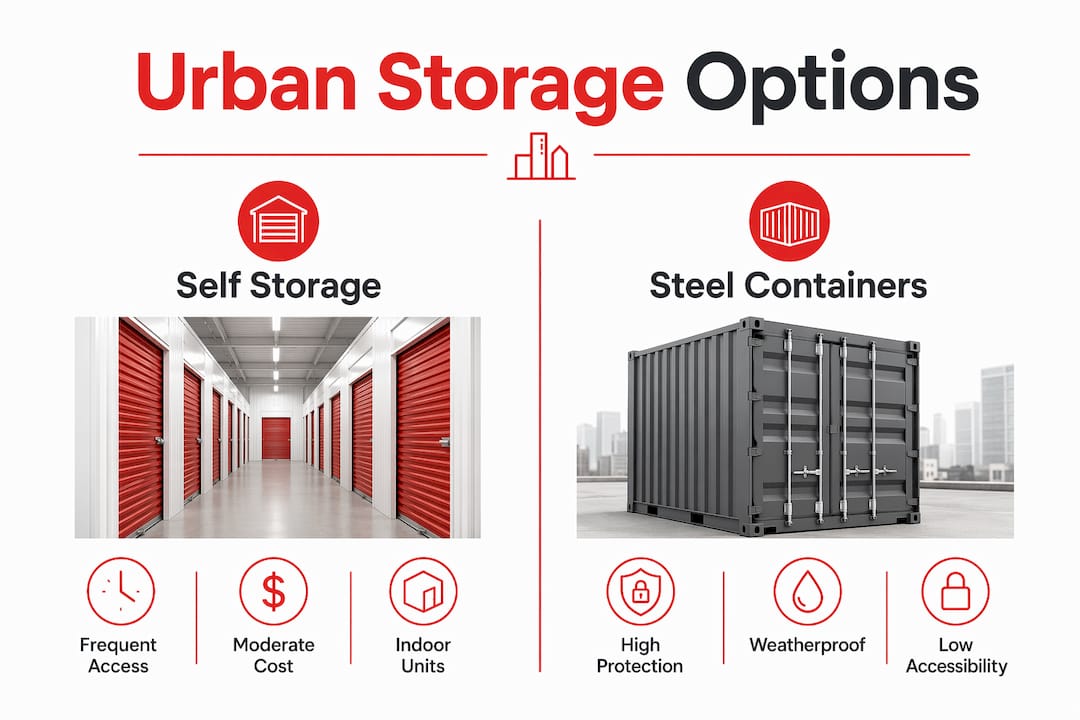
Self-storage, full-service storage, and portable pods each offer a different trade-off between access, cost, and convenience. Self-storage gives you direct, frequent access and full control over your belongings. Full-service storage reduces the physical handling you do, which lowers the risk of damage during loading and unloading. Portable pods sit on-site when local regulations allow, giving you immediate access without a trip across town.
For material protection, steel storage containers outperform all other options. Their sealed construction keeps renovation dust and moisture out far more effectively than plasterboard barriers or fabric covers. Drive-up access makes loading and unloading practical, and their structural integrity protects against accidental impacts.
| Storage type | Best for | Access level | Protection level |
|---|---|---|---|
| Self-storage unit | Frequent access to belongings | High | Moderate |
| Steel container on-site | Materials and bulky furniture | High | High |
| Full-service storage | Minimal handling, long duration | Low | High |
| Portable pod | Mid-project flexibility | Medium | Medium |
Pro Tip: Choose a storage provider that offers month-to-month contracts. Renovation timelines shift, and locking into a fixed term creates financial pressure when your project runs long.
When should you book storage for a renovation?
Book your storage unit 3–4 weeks before your renovation start date. That window gives you time to sort belongings, pack carefully, and arrange transport without rushing. Rushed packing leads to damaged items and disorganized boxes that are hard to navigate when you need something mid-project.
Renovation timelines routinely overrun by 4–12 weeks beyond the original estimate. Unforeseen structural issues, material back-orders, and permit delays are all common. A storage contract that can be extended or cancelled with short notice protects you from paying for unused time or scrambling to find extra space mid-project. Your role as a client includes anticipating these overruns and building flexibility into every logistical decision.
- Book storage 3–4 weeks before work begins, not the week of.
- Choose month-to-month contracts with short cancellation notice periods.
- Pack by room and label every box clearly so retrieval is fast.
- Store valuables, documents, and electronics in a climate-controlled unit.
- Confirm the storage facility has security cameras and individual unit locks.
- Integrate your storage timeline into the overall renovation project schedule so move-in and move-out dates align with project phases.
Key Takeaways
Effective storage planning is the single most cost-efficient step you can take before a renovation begins, protecting both your materials and your project timeline.
| Point | Details |
|---|---|
| Materials need protection | Plasterboard, timber, and insulation represent 40–60% of budgets and are easily damaged without secure storage. |
| Clutter slows contractors | Removing belongings from the work zone reduces hazards and keeps your project on schedule. |
| Steel containers outperform covers | Sealed steel units block dust and moisture far better than dust sheets or plasterboard barriers. |
| Book storage early | Arrange storage 3–4 weeks before work starts to avoid rushed packing and last-minute gaps. |
| Flexible contracts are non-negotiable | Renovation overruns of 4–12 weeks are common; month-to-month storage terms protect your budget. |
The storage mistake I see homeowners make every time
After working through dozens of urban renovation projects, the pattern is clear. Homeowners plan the tile, the cabinetry, and the lighting down to the last detail. Then they leave the furniture in the living room with a dust sheet over it and assume that is enough. It is not.
Renovation dust is not like household dust. It is fine, pervasive, and relentless. It gets into electronics, under upholstery, and into every drawer and cabinet left in the space. We have seen brand-new televisions fail after a renovation because fine silica dust from tile cutting settled into the vents. We have seen leather sofas stained permanently by paint overspray that drifted under a drop cloth. These are not edge cases. They happen regularly.
The other mistake is treating storage as an afterthought. Homeowners call us mid-project asking where to put their furniture because the contractor needs the room cleared immediately. At that point, you are making rushed decisions under pressure, which leads to poor packing, damaged items, and overpaying for whatever unit is available on short notice. Planning storage the same way you plan your contractor selection changes the entire experience. It keeps you in control, protects your investment, and gives your renovation team the clear space they need to do their best work.
— D&J
How Designsbydandj approaches renovation logistics
At Designsbydandj, we treat storage planning as part of the renovation process itself, not an afterthought you figure out the week before work starts. Our design-build remodeling approach integrates logistics, including storage, into the project plan from the first consultation. We walk you through what needs to leave the space, when it needs to leave, and how to protect it while the work happens.

You get clear timelines, honest guidance on what your space requires, and a team that has managed this process across hundreds of urban homes in NYC and NJ. If you are planning a renovation and want a team that handles the details, contact Designsbydandj to schedule a consultation. We will help you build a plan that protects your home, your belongings, and your budget from day one.
FAQ
Why do storage solutions matter so much during a renovation?
Storage solutions protect building materials and household belongings from dust, moisture, and impact damage that are unavoidable on active job sites. Without secure storage, damaged materials force costly reorders and delays that can add weeks and thousands of dollars to your project.
How early should I arrange storage before a renovation?
Book your storage unit 3–4 weeks before your renovation start date. This gives you time to pack carefully and arrange transport without rushing, which reduces the risk of damage during the move.
Are dust sheets enough to protect furniture during a renovation?
Dust sheets are not sufficient protection. Fine renovation dust and accidental spills regularly cause irreversible damage to upholstery and electronics even when covered, making off-site storage the reliable choice.
What type of storage works best for renovation materials?
Steel storage containers provide the highest level of protection for building materials. Their sealed construction blocks moisture and dust far more effectively than open storage spaces or fabric covers.
What happens if my renovation runs longer than expected?
Renovation overruns of 4–12 weeks are common due to structural surprises, permit delays, and material back-orders. Choose a storage provider with month-to-month contracts and short cancellation notice periods so you can extend without penalty.



