
Design-build construction is a project delivery method where one entity handles both the architectural design and the physical construction under a single contract. The Design-Build Institute of America (DBIA) defines this model as the fastest-growing delivery method in the construction industry. The Construction Industry Institute (CII) backs that up with data showing design-build delivers projects 102% faster than traditional design-bid-build methods. If you are planning a renovation or new build, understanding how this method works can save you time, money, and a lot of stress.
What is design-build construction and how does it differ from traditional methods?
Design-build construction is a single-contract delivery model that unifies design and construction under one responsible party. In a traditional design-bid-build approach, you hire an architect separately, wait for completed drawings, then solicit bids from contractors. That separation creates two independent contracts, two sets of priorities, and a gap where miscommunication thrives.
With design-build, the designer and builder work as one team from day one. You have one point of contact, one contract, and one team accountable for the outcome. The DBIA reports that design-build is projected to account for nearly 50% of all construction spending by 2028. That level of adoption reflects how well the model performs across residential, commercial, and public projects.
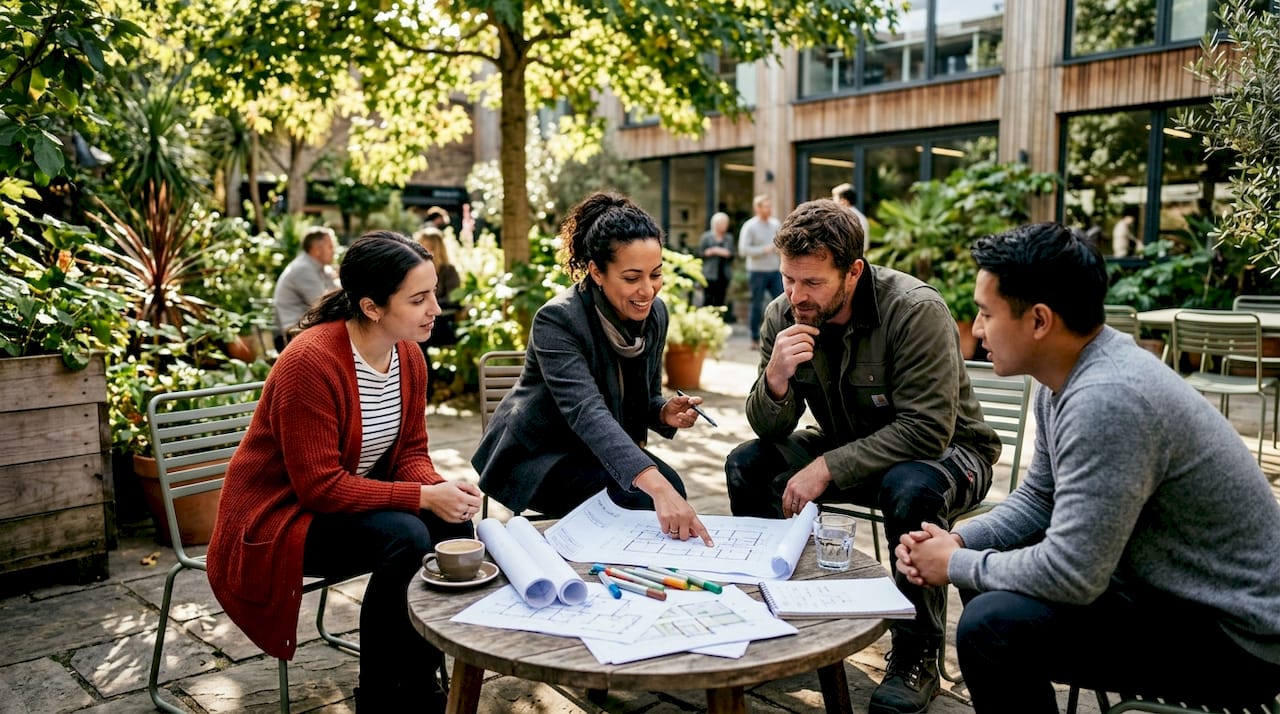
The industry term you will hear alongside “design-build” is integrated project delivery. Design-build is the most widely used form of that concept. Both terms describe the same core idea: design and construction are not separate phases managed by separate parties. They are one coordinated effort.
How does the design-build process work from start to finish?
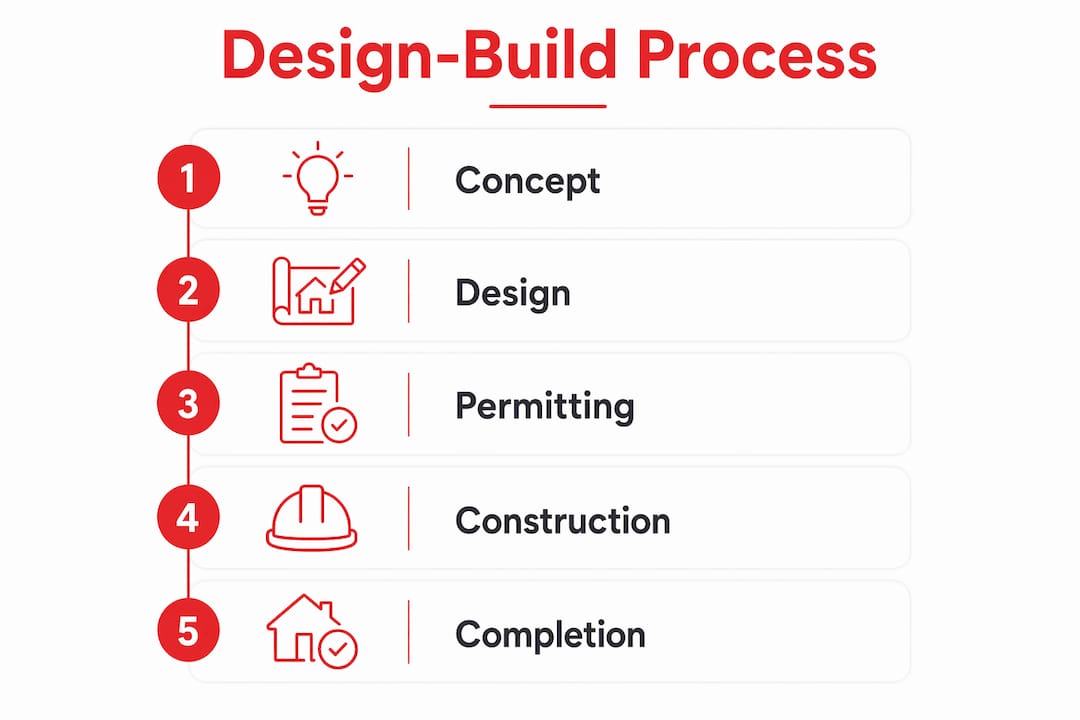
The design-build process follows five clear phases. Each phase builds on the last, and several can overlap, which is exactly where the time savings come from.
- Pre-design and initiation. You meet with the design-build team to define your goals, budget, and timeline. The team assesses the site and establishes the project scope before any drawings are made.
- Design and pre-construction. Architects and engineers develop plans while the construction team reviews them for cost and buildability in real time. Problems get caught on paper, not on the job site.
- Procurement. The design-builder selects subcontractors and orders materials. Because design and procurement overlap, lead times shrink significantly.
- Construction and monitoring. Work begins, often before the full design is finalized. Phased permitting allows construction to start on foundations or structural steel while later permit packages are still being reviewed by local authorities.
- Post-construction closeout. The team completes inspections, resolves punch-list items, and hands over the finished project with all documentation.
The overlapping of phases is the defining feature of this process. Design-build compresses overall schedules by about 33% compared to traditional delivery. That compression comes directly from running design and construction in parallel rather than in sequence.
Pro Tip: Ask your design-build team for a phased permitting plan before work begins. Knowing which permit packages will be submitted and when helps you avoid surprises and keeps the schedule on track.
What are the benefits of design-build construction compared to traditional approaches?
The advantages of design-build are well documented, and the numbers are specific enough to matter when you are weighing your options.
- Faster delivery. Projects are completed 102% faster than traditional design-bid-build. For a homeowner with a hard move-in date, that difference is not a statistic. It is a real deadline met.
- Lower cost growth. CII research shows 3.8% less cost growth in design-build projects compared to traditional methods. Cost growth means the gap between your original budget and your final bill. Smaller gap means fewer unpleasant conversations.
- Fewer change orders. Design-build projects generate 6% fewer change orders than traditional projects. Change orders are the primary driver of budget overruns in construction, so this reduction matters.
- Single-source responsibility. One contract means one accountable party, which eliminates the finger-pointing that happens when a separate architect and contractor disagree about who caused a problem.
- Better communication. When designers and builders share the same office and the same goals, decisions happen faster. You are not waiting for an architect to respond to a contractor’s RFI before work can continue.
- Progressive design-build flexibility. Progressive design-build selects teams based on qualifications rather than price alone. This best-value approach lets you refine scope and budget collaboratively before committing to full construction costs.
Traditional delivery still holds advantages in specific situations. Projects where architectural quality and independent design control are the top priorities, such as high-end residential work or heritage building renovations, may favor traditional methods. The right choice depends on what you value most.
What are the typical challenges or limitations of design-build?
Design-build is not the right fit for every project or every owner. Knowing the limitations helps you go in with clear expectations.
- Reduced independent oversight. In contractor-led design-build, the architect’s role shifts from independent owner advocate to a member of the contractor’s team. Design decisions can be influenced by cost pressures rather than purely by your preferences.
- Contingency pricing on incomplete designs. When contracts are signed with designs that are only roughly 15% complete, contractors price in risk. That contingency can make early bids look higher than a fully documented traditional bid.
- Less competitive bidding. Traditional design-bid-build puts a finished set of drawings in front of multiple contractors. Design-build often involves fewer bidders, which reduces competitive price pressure.
- Phased permitting complexity. Phased permitting accelerates schedules but requires coordination with local building departments. Owners unfamiliar with permit processes can find this stressful.
- Heritage and high-control projects. Buildings with strict preservation requirements or owners who want maximum design control at every step may find traditional delivery a better fit.
Pro Tip: Before signing a design-build contract, ask the team what percentage of the design will be complete at contract execution. The more complete the design, the less contingency gets priced in, and the more accurate your final number will be.
How to determine if design-build is right for your project
Not every renovation or new build is the same. The right delivery method depends on four factors: project complexity, timeline urgency, budget control, and how much design flexibility you need.
| Factor | Design-build fits well | Traditional delivery fits better |
|---|---|---|
| Timeline | Tight deadline, fast occupancy needed | Flexible schedule, no urgency |
| Budget | Fixed budget, cost certainty is the priority | Budget is secondary to design quality |
| Design control | You trust the team and want collaboration | You want independent architect oversight |
| Project type | Renovation, addition, straightforward new build | Heritage restoration, high-end custom architecture |
| Owner involvement | You prefer a single point of contact | You want to manage separate design and build contracts |
Design-build works best when you trust your team and want a clear, coordinated process. If you are renovating a Brooklyn brownstone with a firm move-in date and a defined budget, a qualified design-build firm gives you speed, accountability, and fewer surprises.
If you want to hire an architect to develop a fully detailed vision before any contractor sees the plans, traditional delivery gives you that independence. The tradeoff is time and the risk of miscommunication between two separate contracts.
Progressive design-build sits between the two. It brings the team together early for collaborative scope development while still allowing you to refine the design before committing to full construction costs. For owners who want early input but also want cost certainty, it is worth asking about.
One factor that does not get enough attention is owner readiness. Design-build moves fast. You will be asked to make decisions quickly, and delays on your end slow the whole team down. Going in prepared, with a clear sense of your priorities and a realistic budget, makes the process work the way it is supposed to.
Key takeaways
Design-build construction delivers faster timelines, lower cost growth, and single-source accountability, making it the most practical delivery method for homeowners and developers with defined budgets and firm schedules.
| Point | Details |
|---|---|
| Single contract, one team | Design and construction are unified, eliminating disputes between separate designers and contractors. |
| Faster project delivery | Design-build compresses schedules by about 33% through overlapping design and construction phases. |
| Cost growth is lower | CII research shows 3.8% less cost growth and 6% fewer change orders compared to traditional methods. |
| Limitations exist | Contractor-led teams reduce independent design oversight, and incomplete designs at contract signing add contingency costs. |
| Owner readiness matters | Fast decision-making is required from you. Going in with clear priorities and a defined budget keeps the process on track. |
What I have learned after years of design-build work
The biggest misconception homeowners bring to a design-build project is that “single contract” means “no decisions to make.” The opposite is true. You make more decisions earlier, and those early decisions are the ones that protect your budget. When you lock in scope at the start, the team can price accurately. When scope drifts, costs follow.
The second misconception is that design-build is automatically cheaper. It is not. What it is, is more predictable. There is a difference. A well-run design-build project with a clear scope and a qualified team will almost always land closer to the original budget than a traditional project where the architect and contractor are managing competing interests. But if you sign a contract on a 15% complete design and expect a firm number, you will be disappointed.
What actually makes design-build work is trust built on transparency. The shift design-build requires is a cultural one: engineers and builders have to collaborate directly, which means trust and flexibility replace the traditional adversarial dynamic. At Designsbydandj, we spend real time at the start of every project understanding how you want to live in the space. That conversation shapes every decision that follows. When the team understands your priorities, the design serves your life, not just the drawings.
My honest advice: vet your design-build firm the same way you would vet any contractor. Ask to see completed projects. Ask how they handle scope changes. Ask what their communication process looks like during construction. A firm that cannot answer those questions clearly is not ready to manage your project.
— D&J
Designsbydandj: design-build remodeling in Brooklyn and NYC
Designsbydandj is a family-owned design-build firm serving Brooklyn and New York City homeowners. We handle design and construction under one roof, which means you get one team, one timeline, and one clear budget from start to finish.
Every project starts with a real conversation about how you want to use the space, what matters most to you, and what the finished result should feel like. From there, we build a scope, a budget, and a schedule you can count on. If you are ready to see what a design-build renovation in NYC looks like when it is done right, we are ready to talk. You can also learn more about why Brooklyn homeowners choose a design-build firm over the traditional approach.
FAQ
What is design-build construction in simple terms?
Design-build construction is a delivery method where one company handles both the design and the construction of your project under a single contract. You have one team and one point of accountability from the first meeting to the final walkthrough.
How does design-build differ from the traditional design-bid-build process?
In traditional design-bid-build, you hire an architect first, wait for completed drawings, then solicit separate bids from contractors. Design-build combines both roles under one contract, which eliminates the gap between design and construction and speeds up the overall timeline.
Is design-build construction more expensive?
Design-build is not automatically cheaper, but it produces less cost growth. CII research shows design-build projects experience 3.8% less cost growth and 6% fewer change orders than traditional projects, which means your final bill stays closer to your original budget.
What types of projects are best suited for design-build?
Renovations, additions, and straightforward new builds with defined budgets and firm timelines are the strongest fit for design-build. Projects requiring strict heritage preservation or maximum independent design oversight may be better served by traditional delivery methods.
What is progressive design-build?
Progressive design-build selects the design-build team based on qualifications rather than price, allowing early collaboration to refine scope and budget before full construction begins. It gives owners more input during the design phase while still benefiting from an integrated team.