

A turnkey renovation is defined as a complete, start-to-finish remodel managed by one company, delivering a fully finished, move-in-ready property to the client. You hand over the keys at the start, and the firm handles everything: design, permits, construction, quality control, and final cleanup. Understanding what does turnkey renovation mean is the first step toward choosing the right approach for your home or investment property. The term comes from the idea that the only thing left for you to do is turn the key and walk in.
What does turnkey renovation mean, and what’s included?
A full turnkey service covers every phase needed to transform a property, all handled by one company under a single contract. That scope is broader than most homeowners expect. Here is what a complete turnkey renovation typically includes:
- Site inspection and feasibility assessment. The firm evaluates the property’s condition, structural constraints, and utility systems before any design work begins.
- Custom design and architectural planning. This includes space planning, material selection, and often 3D visualization so you can see the finished result before construction starts.
- Permit and license management. The contractor pulls all required permits, coordinates with local building departments, and manages inspections on your behalf.
- Construction and trade coordination. Plumbing, electrical, carpentry, tiling, and finishing trades are all scheduled and supervised by the same project team.
- Quality control and timeline management. A dedicated project manager tracks milestones, resolves issues on site, and keeps the schedule on track.
- Final installation, cleaning, and handover. The firm completes punch-list items, conducts a final walkthrough, and delivers the space ready to use.
The defining feature is single-entity responsibility. No phase gets handed off to a separate company, and no gap falls between vendors.
Pro Tip: Ask your turnkey provider for a written scope document before signing anything. A clear scope prevents misunderstandings about what “complete” actually means for your specific project.

What are the legal and contractual aspects of a turnkey project?
A turnkey project and a turnkey contract are related but distinct. The project describes the service scope. The contract is the legal instrument that enforces it.
Turnkey contracts fix the price, define the scope, set deadlines, and assign all liability to a single contractor. That legal structure matters more than most homeowners realize. In a traditional multi-contractor remodel, disputes over who caused a delay or a defect are common. Each subcontractor points at another. A turnkey contract eliminates that dynamic by making one firm accountable for the entire outcome.
Key protections a well-drafted turnkey contract provides:
- Fixed budget clause. The agreed price does not change unless you formally approve a scope change in writing.
- Defined scope of work. Every phase, material category, and finish level is specified, reducing the risk of “that wasn’t included” disputes.
- Milestone deadlines. Completion dates for each phase are written into the agreement, giving you legal recourse if timelines slip without cause.
- Single contractor liability. One firm is responsible for defects, delays, and code compliance, regardless of which subcontractor performed the work.
- Warranty terms. Reputable turnkey firms include workmanship warranties covering a defined period after handover.
Legal certainty accelerates decision-making during the project because there is no ambiguity about who approves what. That clarity protects both you and the contractor.
What are the benefits and drawbacks of turnkey renovations?
Turnkey home renovation appeals to homeowners and investors for clear, practical reasons. The benefits are real, but so are the trade-offs.
Benefits worth knowing
Turnkey firms reduce common remodeling problems like miscommunication, scope creep, and misaligned timelines. That reduction comes from having a single point of contact who owns the entire project. You make decisions at the design stage, then step back while professionals execute.
Turnkey-upgraded properties are more marketable and typically command premium pricing because of their cohesive design and move-in readiness. For investors, that translates directly to faster sales and stronger offers. For homeowners, it means the renovation adds measurable value, not just livability.
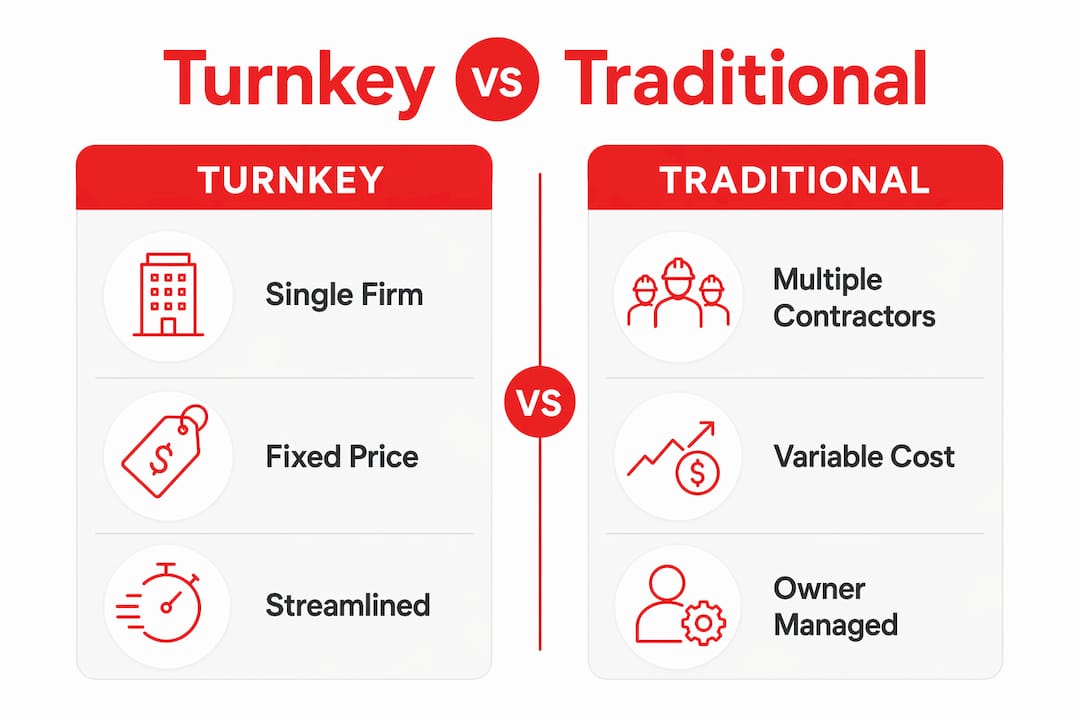
| Factor | Turnkey renovation | Owner-managed remodel |
|---|---|---|
| Point of contact | Single firm | Multiple contractors |
| Budget predictability | Fixed contract price | Variable, prone to overruns |
| Timeline control | Managed by one team | Owner coordinates schedules |
| Permit management | Handled by contractor | Owner’s responsibility |
| Stress level | Low to moderate | High |
| Design flexibility mid-project | Limited | Higher |
Drawbacks to consider honestly
Owners generally surrender some design control for the convenience and predictability a turnkey model provides. If you want to change a tile selection after construction begins, that change goes through a formal process and may affect cost and schedule. Homeowners who enjoy being deeply involved in every decision may find the structured handoff frustrating.
Pro Tip: If design involvement matters to you, clarify the change-order process before signing. A good turnkey firm will have a defined, transparent process for mid-project adjustments.
How does turnkey renovation compare to traditional remodeling?
The core difference is who manages the project. In a traditional remodel, you hire a general contractor, then separately engage an architect, a designer, and specialty trades. You coordinate the schedule, resolve conflicts between vendors, and track the budget yourself. Understanding your role as a client shifts significantly depending on which model you choose.
In a turnkey model, one firm handles all of that. The project management burden moves off your plate entirely.
| Responsibility | Turnkey model | Traditional model |
|---|---|---|
| Design coordination | Contractor | Owner |
| Permit filing | Contractor | Owner or architect |
| Trade scheduling | Contractor | Owner or GC |
| Budget tracking | Contractor | Owner |
| Dispute resolution | Internal to one firm | Owner mediates |
| Final quality check | Contractor-led | Owner-led |
The practical impact shows up in time and stress. A homeowner managing a traditional remodel typically spends significant hours per week on calls, site visits, and vendor coordination. A turnkey client reviews design decisions upfront, then receives progress updates on a set schedule.
Turnkey is especially well suited for:
- Investors renovating properties they do not live near
- Homeowners with demanding work schedules
- Multi-unit renovation projects where trade coordination is complex
- Properties requiring aging-in-place modifications with precise technical requirements
Traditional owner-managed remodeling makes more sense when you have construction knowledge, time to manage vendors, and a strong preference for hands-on control at every stage.
When should you choose a turnkey renovation?
Turnkey remodeling is best suited for high-end properties, second homes, and projects requiring complex aging-in-place modifications. Those scenarios share a common trait: the coordination demands are high enough that a single firm managing everything produces a better outcome than an owner juggling multiple vendors.
Practical situations where turnkey delivers the most value:
- Investment properties. Investors want a finished, rentable or sellable asset without spending weeks managing contractors.
- Second homes and vacation properties. You cannot be on site to supervise, so a single accountable firm is not just convenient. It is necessary.
- Aging-in-place projects. Grab bars, widened doorways, roll-in showers, and ramp installations require precise coordination between structural, plumbing, and finish trades.
- Full-home gut renovations. When every system in a home is being replaced or upgraded, the coordination complexity alone justifies a turnkey approach.
To get the most from a turnkey project, set expectations clearly at the start. Define your budget ceiling, your must-have finishes, and your timeline constraints in writing before design begins. Good contractor communication throughout the project keeps surprises to a minimum and decisions moving forward.
Pro Tip: Schedule a formal midpoint walkthrough in addition to the final one. Catching issues at the halfway mark is far less costly than addressing them after finishes are installed.
Key Takeaways
A turnkey renovation delivers a fully finished, move-in-ready property under a single contract, centralizing design, permits, construction, and handover with one accountable firm.
| Point | Details |
|---|---|
| Single-entity responsibility | One firm manages design, permits, trades, and final delivery under one contract. |
| Legal protection through contract | Turnkey contracts fix price, scope, and deadlines, assigning all liability to one contractor. |
| Best fit for complex projects | High-end homes, second homes, and aging-in-place modifications benefit most from turnkey coordination. |
| Trade-off in owner control | Owners gain predictability but surrender some flexibility to make mid-project design changes. |
| Market value advantage | Turnkey-upgraded properties sell faster and attract stronger offers due to cohesive, move-in-ready condition. |
What we’ve learned from running turnkey projects
The biggest misconception I see is that turnkey means “hands off forever.” It does not. The most successful turnkey projects happen when the homeowner or investor is deeply engaged at the design stage, then trusts the team to execute. Front-loading your decisions, your preferences, and your non-negotiables is what makes the back end of the project feel effortless.
The second thing I have learned is that the quality of the turnkey experience depends almost entirely on the firm you choose. A well-organized design-build firm with a clear process, licensed trades, and consistent communication will deliver exactly what the model promises. A disorganized one will give you all the drawbacks and none of the benefits. Vet your provider the way you would vet a surgeon. Ask for references from completed projects, review their contract terms carefully, and pay attention to how they communicate during the proposal stage. That behavior predicts how they will communicate when a problem comes up on site.
The future of turnkey remodeling is moving toward more detailed pre-construction visualization and tighter digital project tracking. Clients increasingly expect to see 3D renderings, review material selections online, and track milestones in real time. Firms that build those capabilities into their process will define the standard going forward.
— D&J
Turnkey renovation services from Designsbydandj
Designsbydandj is a family-owned design-build firm serving homeowners and investors in New York and New Jersey. We manage every phase of your renovation under one roof, from initial design and permit filing through construction and final walkthrough.

Our process is built around transparency: clear scope documents, honest timelines, and consistent communication at every stage. You always know where your project stands. If you are ready to understand how a design-build approach applies to your specific property, or you want to explore our NYC and NJ renovation services, both pages give you a detailed look at how we work and what to expect.
FAQ
What does turnkey renovation mean in simple terms?
A turnkey renovation is a complete remodel managed by one company, covering design, permits, construction, and final delivery. You receive a finished, move-in-ready property without coordinating any vendors yourself.
What is included in a turnkey renovation contract?
A turnkey contract defines a fixed price, scope of work, project deadlines, and assigns all liability to a single contractor. It legally protects both parties and eliminates the “finger-pointing” common in multi-contractor projects.
Is turnkey renovation more expensive than traditional remodeling?
Turnkey renovation typically costs more upfront because it includes project management, design coordination, and permit handling as part of the service. However, the fixed contract price and reduced risk of cost overruns often make the total spend more predictable.
Who benefits most from a turnkey home renovation?
Turnkey renovation is best suited for investors, second-home owners, and homeowners tackling complex projects like aging-in-place modifications or full-home gut renovations where coordination demands are high.
Can I make design changes during a turnkey renovation?
Changes are possible but go through a formal change-order process that may affect cost and schedule. The best approach is to finalize all design decisions before construction begins to avoid delays.