

Boiler replacement during a home renovation is defined as the full process of removing an existing heating unit, installing a new one, upgrading connected systems as needed, and commissioning the entire setup to meet current safety and efficiency standards. This process goes well beyond a simple swap. It includes a pre-installation survey, pipework assessment, system flushing, and a final handover with documented commissioning. For Brooklyn homeowners, understanding what boiler replacement involves in a renovation means knowing the scope, the timeline, and the costs before work begins. Designsbydandj guides homeowners through every stage with clear estimates and no surprises.
What are the key steps in the boiler replacement process during renovation?
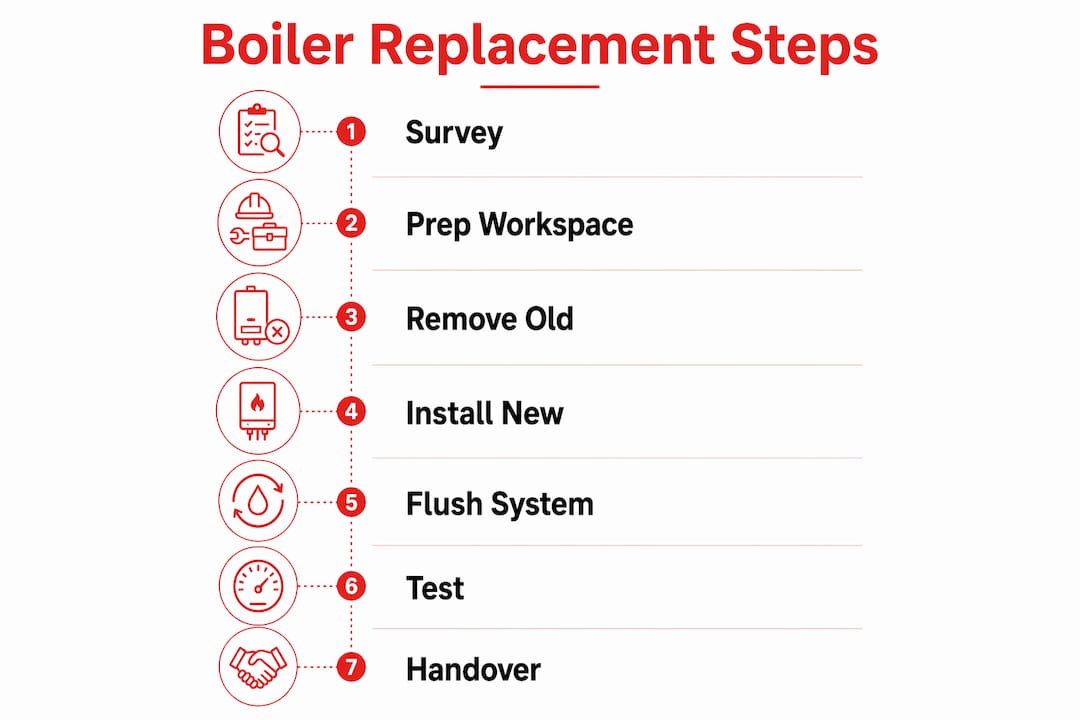
The boiler installation process follows seven defined stages: survey, preparation, removal, installation, flushing, testing, and handover. Each stage has a specific purpose, and skipping any one of them creates problems down the line.
1. Home survey and heating demand assessment
A licensed technician visits your home before any work begins. The survey determines the correct boiler size for your space. A proper pre-installation survey prevents oversizing or undersizing, which causes short-cycling and premature wear. Getting this step right protects your investment from day one.
2. Workspace preparation
The installer protects floors, walls, and nearby surfaces before touching any equipment. This matters especially during active renovations, where dust and debris are already present. Good preparation keeps the rest of your renovation clean and on schedule.
3. Safe removal of the old boiler
The old unit is disconnected from gas, water, and electrical supplies before removal. Associated pipework that no longer meets code gets removed at this stage too. Disposal of the old unit follows local regulations.
4. Installation of the new boiler
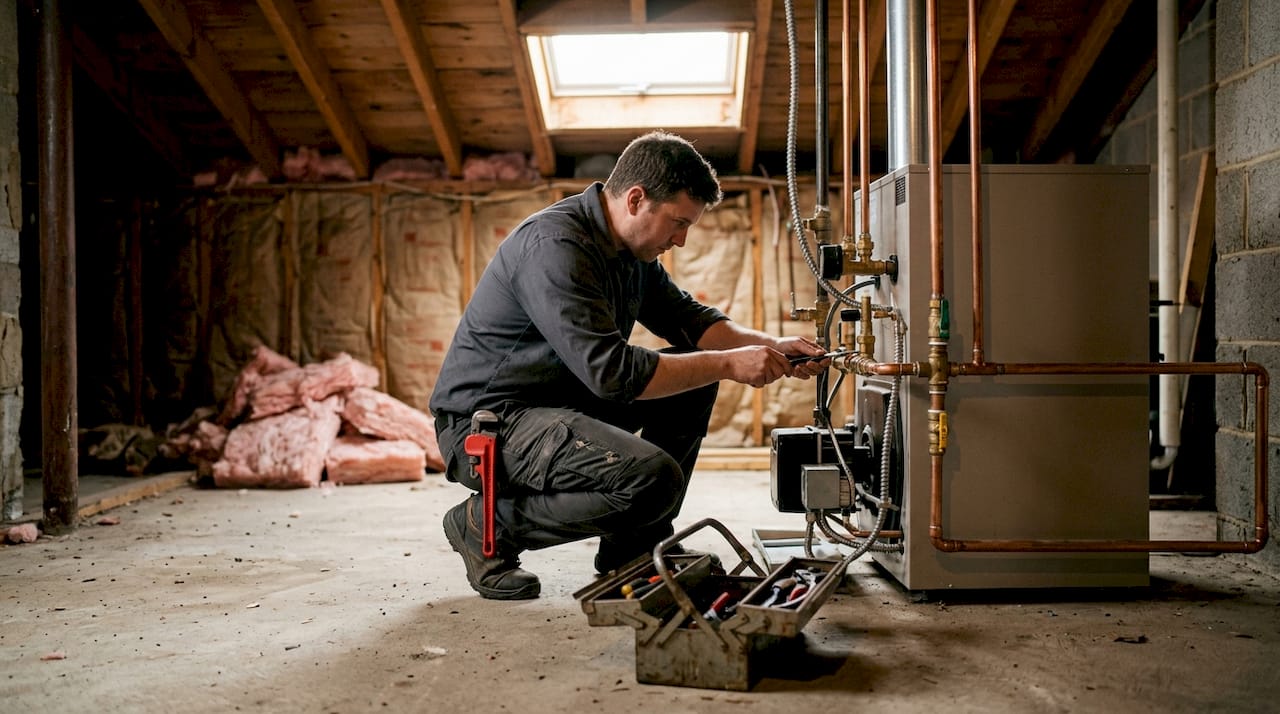
The new unit goes in with all pipe, venting, and electrical connections made to current standards. This includes fitting the flue correctly and connecting to the existing or upgraded pipework. The installer checks that every connection is secure before moving forward.
5. System flushing and cleaning
Chemical flushing and magnetic filters protect the new boiler from sludge damage and extend its lifespan. Sludge buildup is one of the most common causes of boiler breakdowns. Skipping this step voids many manufacturer warranties.
6. Testing and commissioning
The system runs through a full test cycle. Pressure, flow rates, and thermostat response all get checked. The installer adjusts settings to match your home’s heating demand.
7. Final handover and paperwork
You receive operating instructions, warranty documents, and a completed commissioning checklist. Timely warranty registration and documented commissioning are critical for manufacturer protection and future service support.
Pro Tip: Ask your installer to walk you through the thermostat settings and show you how to reset the boiler before they leave. This five-minute conversation saves a service call later.
How do pipework upgrades, boiler type changes, and relocation affect scope and timeline?
The complexity of your boiler replacement depends on three main variables: the condition of existing pipework, whether you are changing boiler type, and whether the unit is moving to a new location. Each factor adds time, cost, and coordination requirements to your renovation.
Like-for-like replacement vs. system conversion
A like-for-like replacement swaps the old boiler for a new model of the same type in the same location. This is the most straightforward scenario. A system conversion, such as switching from a conventional system to a combi boiler, requires removing the hot water cylinder, capping off old pipes, and running new ones. That scope of work affects your renovation timeline significantly.
Pipework condition and code compliance
Older homes often require gas line upgrades and shutoff valve replacements to comply with current codes. These hidden issues extend a simple replacement project beyond what most homeowners expect. Brooklyn brownstones and pre-war buildings frequently have undocumented pipework that needs assessment before any new equipment goes in. An environmental survey before renovation catches these issues early and keeps your budget on track.
Boiler relocation considerations
Moving a boiler to a new location adds flue rerouting, new gas supply lines, and additional electrical work. Each of those tasks requires separate coordination with your renovation team. Relocation also typically requires a permit in New York City, which adds lead time to your schedule.
What to expect for timelines
- A straightforward like-for-like replacement in good condition: 1 day
- A conversion or system upgrade with new controls: 2–3 days
- A relocation with pipework upgrades and permit work: 3–5 days
Complex boiler projects involving relocation or conversion typically run 2–5 days. That timeline aligns with what Designsbydandj sees on Brooklyn renovation projects regularly. For a broader view of how mechanical work fits into a full renovation, the NYC renovation timeline guide breaks down realistic schedules by project type.
Common disruptions to plan for
- Water and heat shutoff for the duration of installation
- Restricted access to the boiler room or utility area
- Noise from pipe cutting and fitting work
- Temporary gas shutoff affecting other appliances
Discussing your renovation phases with your installer before work starts is the single most effective way to reduce disruption. When the boiler replacement is scheduled alongside related plumbing or mechanical work, the overall project runs faster and costs less.
What system maintenance and upgrades are essential when replacing a boiler?
A new boiler installed into a dirty or undersized system will underperform and fail early. The upgrades below are not optional extras. They are part of a complete boiler replacement done correctly.
Chemical flushing and power flushing
A chemical flush or power flush removes sludge from the system before the new boiler connects. Sludge causes cold spots in radiators and forces the boiler to work harder than it should. Many manufacturers require documented flushing to validate the warranty. Without it, a breakdown claim can be denied.
Magnetic filters
A magnetic filter attaches to the return pipe and captures iron oxide particles before they reach the boiler. Installing one at the time of replacement is far cheaper than repairing sludge damage later. Most quality installers include this as standard.
Gas pipe and electrical upgrades
- Undersized gas supply pipes restrict flow and reduce boiler efficiency
- Old shutoff valves that do not meet current code must be replaced
- Electrical connections need to meet current wiring standards for the new unit
- A dedicated circuit may be required for modern boiler controls
Modern controls and thermostats
Upgrading to a programmable or smart thermostat at the time of boiler replacement delivers measurable efficiency gains. You get better control over heating schedules without any additional disruption to your home. Pairing a new boiler with outdated controls wastes the efficiency gains the new unit provides.
Pro Tip: Ask your installer whether your current radiator valves are compatible with the new boiler. Thermostatic radiator valves (TRVs) paired with a new combi boiler give you room-by-room temperature control at low cost.
Skipping these upgrades to save money upfront is one of the most common plumbing renovation mistakes Brooklyn homeowners make. The short-term saving typically results in a repair call within the first two years.
How do you minimize disruption during a boiler replacement in a Brooklyn home?
Good planning before installation day is what separates a smooth replacement from a stressful one. The steps below apply whether you are replacing a boiler as a standalone project or as part of a larger renovation.
Coordinate early with your installer and renovation team
Schedule the boiler replacement to align with related mechanical or plumbing work already planned. When trades share access to the same area, you reduce the total number of disruption days. Designsbydandj coordinates this kind of scheduling as part of its design-build process, so no trade is waiting on another.
Prepare your home before installation day
- Clear the area around the boiler of stored items and furniture
- Identify and label your main water and gas shutoffs
- Arrange alternative heating if the job runs into cold weather
- Confirm parking or building access for the installation crew
Understand what will be shut off and for how long
Temporary shutdowns of water, gas, and heat are standard during installation. These disruptions are short and manageable with good planning. Knowing in advance that your heat will be off from 8:00 AM to 4:00 PM is far less stressful than discovering it mid-morning.
Use only licensed professionals
Licensed professionals are required for gas boiler work due to strict safety regulations. In New York City, unlicensed gas work is illegal and voids your homeowner’s insurance. Always verify that your installer holds the appropriate New York State license and carries liability insurance. For Brooklyn multi-unit buildings, the Brooklyn renovation best practices guide covers additional compliance requirements specific to the borough.
Document everything at handover
Keep your commissioning checklist, warranty registration confirmation, and installer’s license number in one place. These documents matter when you sell the property or make a warranty claim. The free homeowner checklist from Designsbydandj gives you a ready-made format for tracking installation details and renovation milestones.
Pro Tip: Take photos of all new pipework and connections before walls are closed up. If a leak develops later, those photos tell the repair technician exactly what is behind the wall.
What I’ve learned from boiler replacements in Brooklyn renovations
The most consistent mistake I see is homeowners treating boiler replacement as a single-trade job. They call a plumber, get the unit swapped, and then discover the new boiler doesn’t perform as expected because the system was never flushed, the controls were never upgraded, and the pipework was never assessed. That sequence costs more to fix than doing it right the first time.
Brooklyn homes present specific challenges. Pre-war buildings often have cast iron radiator systems with decades of sludge. Brownstones have boilers tucked into tight basement spaces where relocation requires creative flue routing. These are not problems that surprise an experienced contractor. They are problems that surprise a homeowner who hired the cheapest bidder without asking the right questions.
The value of working with a design-build firm on a boiler replacement within a renovation is coordination. When the boiler replacement is planned alongside kitchen or bathroom work, the mechanical rough-in happens at the right time, permits are pulled together, and the schedule holds. When it is treated as an afterthought, it delays everything else. I have seen a single unplanned boiler relocation push a kitchen renovation back by three weeks because the gas line work required a permit that nobody had applied for.
My honest recommendation: treat the boiler replacement as a core renovation task, not a maintenance call. Plan it with the same rigor you apply to your kitchen layout or bathroom tile selection. The HVAC integration guide covers this mindset in detail for homeowners who want to get it right.
— D&J
Designsbydandj handles boiler replacement within your Brooklyn renovation
Designsbydandj is a family-owned design-build firm that manages every phase of your renovation, including mechanical system replacements like boiler upgrades. We coordinate licensed plumbers, electricians, and general contractors under one plan so your boiler replacement fits into your renovation schedule without delays or budget surprises.

Whether you are replacing a boiler in a Brooklyn brownstone or upgrading a heating system as part of a full gut renovation, our design-build remodeling services keep every trade on the same page. We handle permits, scheduling, and quality checks so you do not have to manage multiple contractors on your own. Use our NYC renovation calculator to get a realistic cost estimate for your project, or contact us to schedule a consultation.
FAQ
What does boiler replacement involve in a renovation?
Boiler replacement in a renovation involves surveying, removing the old unit, installing the new one, flushing the system, upgrading pipework or controls as needed, and completing a documented commissioning process. The full scope depends on boiler type, system condition, and whether relocation is required.
How long does a boiler replacement take?
A straightforward like-for-like replacement takes one day. Complex projects involving system conversion or boiler relocation typically take 2–5 days, depending on pipework condition and permit requirements.
Do I need a licensed contractor for boiler replacement in New York?
Yes. New York City requires licensed professionals for all gas boiler work. Unlicensed installation is illegal, voids homeowner’s insurance, and creates serious safety risks.
What is a Benchmark commissioning checklist?
The Benchmark commissioning checklist is a standardized document completed by the installer at the end of a boiler installation. It records system settings, test results, and compliance details, and is required by most manufacturers to validate the warranty.
Should I flush my heating system when replacing a boiler?
Yes. A chemical flush or power flush removes sludge that causes cold radiators and boiler breakdowns. Many manufacturers require documented flushing to honor the warranty on a new unit.
Key takeaways
Boiler replacement during a renovation requires a structured, multi-step process covering survey, installation, system upgrades, and commissioning to protect performance, safety, and warranty validity.
| Point | Details |
|---|---|
| Survey before installation | A pre-installation survey prevents boiler oversizing and protects long-term system efficiency. |
| Timeline varies by complexity | Simple replacements take one day; conversions or relocations run 2–5 days. |
| System flushing is non-negotiable | Chemical flushing removes sludge and is required by most manufacturers to validate the warranty. |
| Licensed professionals are required | New York City law mandates licensed contractors for all gas boiler work. |
| Document everything at handover | Keep the commissioning checklist and warranty registration to protect your investment and resale value. |



