

The role of architect in design-build is defined by a single structural shift: the architect works as a subcontractor to the design-builder, not as a direct agent of the owner. This changes everything about how design decisions get made, who holds liability, and where the architect’s professional loyalty sits. For homeowners and developers, understanding this distinction is the difference between a project that runs smoothly and one full of costly surprises. The American Institute of Architects documents AIA A141 and B143 formalize these relationships, and design-build is projected to account for nearly 50% of all U.S. construction spending by 2028.
How does the role of architect in design-build differ from traditional delivery?
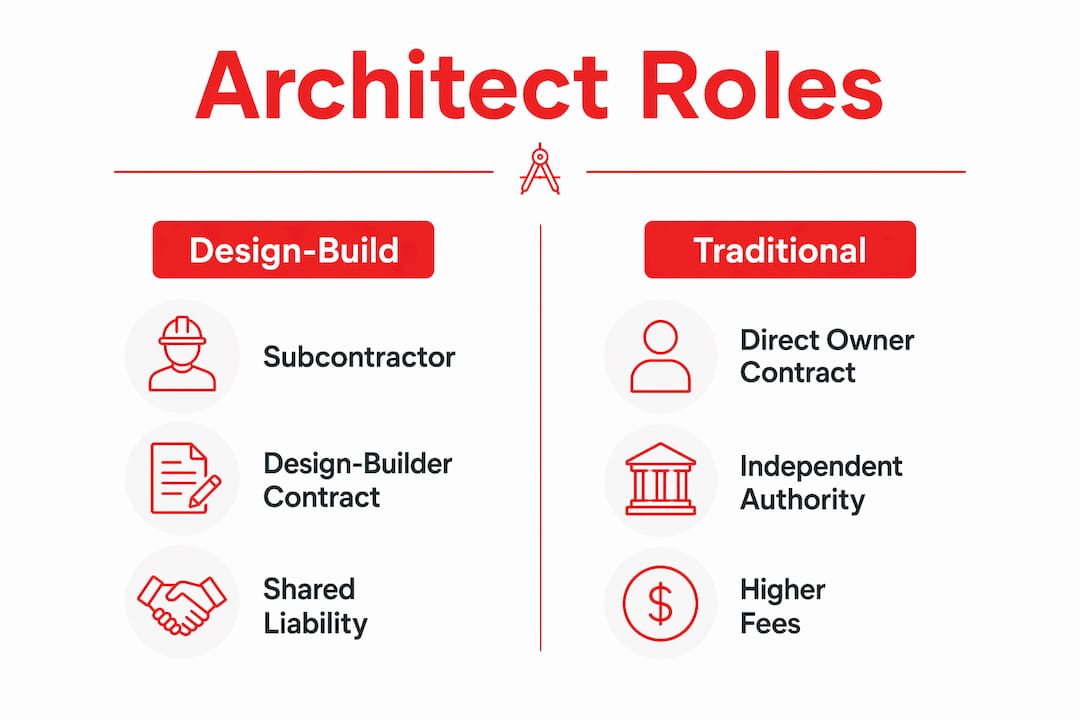
In traditional design-bid-build (DBB), the architect contracts directly with the owner. The architect acts as the owner’s representative, reviews contractor work, and holds independent authority over design decisions. In design-build, that relationship flips entirely.
Architects in design-build serve as subcontractors to the design-builder. Their design decisions are governed contractually by the design-builder’s cost and schedule constraints, not by the owner’s preferences alone. This is not a minor procedural difference. It reshapes the architect’s professional autonomy at every phase of the project.
Here is how the two delivery models compare across the dimensions that matter most to you as a homeowner or developer:
| Factor | Design-Build | Design-Bid-Build |
|---|---|---|
| Architect’s contract | With design-builder | Directly with owner |
| Design authority | Shared with builder | Primarily architect-led |
| Owner advocacy | Limited; builder-aligned | Strong; architect as agent |
| Liability for design errors | Design-builder assumes primary | Architect assumes primary |
| Typical combined fees | 8–13% of project cost | 10–14% of project cost |
The fee difference is real. Design-build projects carry total fees around 8–13%, compared to 10–14% for traditional DBB. That cost reduction comes from reduced fragmentation between design and construction teams.
One thing does not change regardless of delivery method: the architect’s professional obligation to protect public health and safety. State licensing boards hold architects to this standard whether they work for an owner or a builder. That duty exists above and beyond any commercial contract.
How do architects and builders collaborate to improve project outcomes?
Integrated collaboration is the defining advantage of design-build delivery. When architects and builders work together from day one, the project benefits in ways that a sequenced DBB process simply cannot match.

Preconstruction integration between architects and builders reduces change orders by enabling real-time constructability reviews and cost modeling during design development. Change orders are one of the most common sources of budget overruns in renovation and construction projects. Catching a structural conflict or a material lead-time issue during design costs far less than resolving it mid-construction.
The collaboration process in a well-run design-build project typically follows this sequence:
- Kickoff alignment. The architect and builder meet with the owner to establish design goals, budget targets, and schedule milestones before any drawings are produced.
- Concurrent design and cost modeling. As the architect develops schematic designs, the builder prices them in real time. This prevents designs from exceeding budget before they are finalized.
- Constructability reviews. The builder reviews design documents for practical build challenges, flagging issues like tight tolerances, specialty subcontractor requirements, or long-lead materials.
- Site coordination meetings. Once construction begins, the architect participates in regular site visits and coordination meetings to verify that built work matches design intent.
- Quality control sign-off. The architect reviews completed phases and confirms compliance with drawings, specifications, and applicable building codes.
Design-build projects lock in lump-sum or guaranteed maximum price (GMP) pricing when design is 60–80% complete. This is significantly faster than traditional models, which require 100% construction documents before pricing. For you as an owner, that means earlier cost certainty and fewer financial surprises.
Pro Tip: Ask your design-build team to show you a cost model at each design milestone, not just at the end of schematic design. Seeing the numbers evolve alongside the drawings keeps you informed and prevents sticker shock at contract signing.
The architect also plays a quality control role that homeowners often overlook. During construction, the architect reviews submittals, shop drawings, and material samples to confirm they match the approved design. This function protects the design intent even after the drawings leave the architect’s desk.
What contractual and liability frameworks govern architect responsibilities?
The legal structure of design-build is more complex than most homeowners realize. Two AIA contract documents define the relationships that govern every design-build project.
AIA A141 is the Owner-Design Builder Agreement. It sets the terms between you and the design-build entity, including scope, price, schedule, and the design-builder’s overall liability. AIA B143 is the Design-Builder-Architect Agreement. It governs the relationship between the design-builder and the architect subcontractor, including the flow-down of professional liability.
The liability flow-down is the most important concept for owners to understand. The design-builder assumes professional liability for integrated design errors, with architects subcontracting liability through clear flow-down provisions. In plain terms: if the design has an error, the design-builder is your first point of accountability, not the architect directly.
Key contractual points every owner should review before signing:
- Scope of architect services. Confirm exactly which design phases the architect covers, from schematic design through construction administration.
- Liability caps and insurance. Verify that the architect carries errors and omissions (E&O) insurance and that the policy limits are adequate for your project size.
- Design change authority. Clarify who has final authority to approve design changes once construction begins.
- Owner approval rights. Negotiate explicit rights to review and approve major design decisions, even within the design-build structure.
- Professional licensing compliance. Confirm the architect holds a current license in your state and that all drawings will be stamped by a licensed professional.
Design-build contracts give the design-builder ultimate authority over design decisions. This can create tension between the architect’s design quality obligations and the builder’s cost control goals. Knowing this dynamic exists before you sign protects you from being caught off guard when design compromises arise.
Pro Tip: If your project involves landmark status, historic preservation requirements, or complex zoning, consider hiring an independent owner’s advisor with architectural credentials. This person reviews documents on your behalf and has no financial alignment with the design-builder.
How can homeowners and developers engage architects effectively in design-build?
Your role as an owner in design-build is more active than in traditional delivery. The speed of integrated projects means decisions come faster, and delays on your end can ripple through the schedule.
Design-build project speed requires owners to make timely decisions during overlapping design and construction phases to avoid delays. Set a personal rule: respond to design decisions within 48 hours of receiving them. Slow owner decisions are one of the most common causes of schedule slippage in design-build projects.
Practical steps for engaging your architect and design-build team effectively:
- Define your priorities before the first meeting. Know your non-negotiables on design, your firm budget ceiling, and your move-in deadline. Architects can only advocate for what you tell them matters.
- Ask how the architect is selected. Some design-build firms use in-house architects; others subcontract to independent firms. Understanding this tells you how much design flexibility exists.
- Request design quality references. Ask the design-builder for completed projects where you can evaluate the architect’s work. Design quality varies widely across design-build teams.
- Evaluate the architect-builder relationship before signing. Teams that have worked together before communicate faster and make fewer errors than newly assembled groups.
- Consider an owner’s advisor for large projects. Homeowners often mistakenly expect architects to be their independent advocates in design-build. An owner’s advisor fills that gap without disrupting the integrated team structure.
Design-build is growing rapidly, and architects increasingly serve as owner advisors independent from design-build teams. This emerging role gives you access to architectural expertise without the contractual conflicts that come with the subcontractor structure. For complex or high-value projects, this option is worth serious consideration.
The most effective owners treat design-build as a partnership, not a handoff. You bring the vision and the decisions. The architect and builder bring the technical execution. When all three parties communicate clearly and consistently, the integrated model delivers on its promise.
Key Takeaways
The architect in design-build serves as a subcontractor to the design-builder, which shifts design authority, liability, and owner advocacy compared to traditional delivery.
| Point | Details |
|---|---|
| Architect’s contractual position | Architects subcontract to the design-builder, not the owner, affecting design authority and professional alignment. |
| Cost advantage of design-build | Combined fees run 8–13% versus 10–14% in traditional DBB, reducing overall project cost. |
| Liability flows through design-builder | The design-builder holds primary liability for design errors; AIA A141 and B143 formalize this structure. |
| Owner decisions drive the schedule | Timely owner approvals during overlapping design and construction phases prevent costly delays. |
| Independent advocacy is available | Owners can hire an owner’s advisor with architectural credentials to maintain independent project oversight. |
What I’ve learned about architect roles after years in design-build
Most clients come to us thinking the architect is their person on the inside, the one looking out for their interests while the builder focuses on cost. That assumption is understandable. In traditional construction, it is accurate. In design-build, it is not, and the gap between expectation and reality causes more friction than almost any other misunderstanding we see.
The good news is that the integrated model, when the architect and builder genuinely collaborate, produces better outcomes than the traditional approach for most residential and commercial renovation projects. We have seen it firsthand. When the architect is involved in pricing conversations from week one, design decisions get made with full awareness of their cost impact. There are no late-stage redesigns because a detail turned out to be twice the budget. The design stays honest to the project from the start.
What I tell every client is this: ask hard questions about how the architect and builder relationship actually works before you commit. A design-build firm where the architect and builder have a history of working together is a fundamentally different product than one where they are meeting for the first time on your project. That relationship quality does not show up in a proposal document. You have to ask for it directly.
— D&J
Designsbydandj brings design and construction together for you
At Designsbydandj, we operate as a fully integrated design-build firm. Our architectural and construction teams work together from the first conversation, not after contracts are signed. That means your design is priced honestly from day one, your schedule is realistic, and you are never caught between two parties pointing fingers at each other.

We specialize in high-quality renovations across New York City, with a process built around clear communication, honest timelines, and quality work at every phase. Whether you are planning a full gut renovation or a targeted remodel, our design-build remodeling services are structured to keep you informed and in control. If you want to understand what your project will actually cost before committing, our NYC renovation calculator is a practical starting point.
FAQ
What is the architect’s role in a design-build project?
The architect serves as a subcontractor to the design-builder, responsible for producing design documents and supporting construction administration while operating within the builder’s cost and schedule constraints.
Who does the architect represent in design-build?
The architect’s contract runs with the design-builder, not the owner. Owners who want independent architectural advocacy should consider hiring a separate owner’s advisor.
How do AIA A141 and B143 affect my project?
AIA A141 governs the agreement between the owner and design-builder, while AIA B143 governs the design-builder and architect relationship, including how professional liability flows between them.
Does design-build cost less than traditional construction?
Design-build projects typically carry combined fees of 8–13% of project cost, compared to 10–14% for traditional design-bid-build, reflecting the efficiency gains from integrated delivery.
How can I protect my design interests in a design-build contract?
Negotiate explicit owner approval rights for major design decisions, confirm the architect carries E&O insurance, and review the scope of architect services in the AIA B143 agreement before signing.



