

Brooklyn renovations are exciting until they aren’t. The renovation red flags Brooklyn homeowners miss early are the same ones that turn a six-month project into a year-long ordeal with a budget that’s doubled. Between NYC’s strict permit requirements, aging brownstone structures, and a skilled labor shortage that’s made reliable contractors harder to find, the stakes here are genuinely high. This article breaks down the specific warning signs you need to recognize before and during your renovation so you can protect your investment, your timeline, and your sanity.
Table of Contents
- Key takeaways
- 1. Permit and legal compliance red flags
- 2. Contractor red flags you should never overlook
- 3. Structural and inspection red flags in Brooklyn homes
- 4. Budget and timeline red flags to catch early
- 5. Communication and contract red flags
- My take on renovation red flags after years in Brooklyn
- Work with a team that knows Brooklyn renovations
- FAQ
Key takeaways
| Point | Details |
|---|---|
| Permits are non-negotiable | Unpermitted work in NYC can trigger fines over $10,000 and derail your home’s resale. |
| Vet contractors beyond price | The lowest bid often signals the highest risk. Check licenses, references, and written contracts. |
| Specialty inspections matter | A standard home inspection misses structural and envelope issues common in Brooklyn brownstones. |
| Budget for the unexpected | Realistic Brooklyn renovations require a contingency of at least 20 to 30 percent above your base estimate. |
| Document everything in writing | Verbal agreements lead to disputes. Every change, payment, and timeline shift needs a paper trail. |
1. Permit and legal compliance red flags
This is where Brooklyn renovations go sideways fast. NYC has some of the most detailed building codes in the country, and Brooklyn’s mix of landmarked blocks, occupied multi-family buildings, and aging row houses makes compliance even more layered.
The biggest red flag? A contractor who tells you permits aren’t needed for your scope of work, or who says they’ll “handle it” without showing you documentation. Unpermitted work fines from the NYC Department of Buildings can reach $10,000 for 1 to 2 family homes, with daily penalties and stop-work orders on top. And skipping permits doesn’t just cost you now. It creates serious complications when you sell, because buyers’ attorneys and title companies will find it.
Watch for these specific warning signs:
- Contractor avoids pulling permits and suggests you won’t need them for “minor” structural work
- No mention of a Tenant Protection Plan for occupied buildings, which NYC code requires
- Contractor cannot provide their NYC license number or proof of insurance on request
- Permit applications filed under a different address or scope than what’s actually being built
Pro Tip: If your building is occupied during renovation, ask your contractor directly about the Tenant Protection Plan requirement. NYC building code mandates third-party weekly inspections during demolition and construction, and failure to notify the DOB 72 hours in advance can trigger violations and stop-work orders.
The smarter move is always to pay permit fees upfront. Skipping permits costs far more in the long run than the fees themselves, especially when fines, remediation work, and resale complications stack up.
2. Contractor red flags you should never overlook
Finding a reliable contractor in Brooklyn right now is genuinely difficult. Renovations are taking three times longer than they did seven years ago, largely because of skilled labor shortages. That pressure makes it tempting to hire fast. Hiring fast without vetting properly is one of the most common renovation mistakes homeowners make.
Here are the contractor red flags that should stop you cold:
- A bid that’s 20 to 30 percent lower than every other estimate you received
- Requests for more than 33 percent of the total project cost as an upfront deposit
- No written contract, or a contract that lacks a clear payment schedule tied to milestones
- Pressure to sign quickly or start work before paperwork is complete
- Inability to provide references from Brooklyn or NYC projects completed in the last two years
New York State law under N.Y. Gen. Bus. Law § 771 requires written contracts over $500 with specific payment terms, and recommends deposits between 10 and 33 percent. Any contractor asking for 50 percent or more upfront is a serious warning sign.
Pro Tip: Before signing anything, ask your contractor for the names of two or three past clients in Brooklyn whose projects are similar in scope to yours. Then actually call them. Ask specifically about how the contractor handled unexpected problems, not just whether the finished product looked good. That’s where you’ll learn the most.
For a structured approach to screening trades, the contractor vetting questions outlined by Designsbydandj are a solid starting point.
3. Structural and inspection red flags in Brooklyn homes
Brooklyn brownstones and row houses carry decades of deferred maintenance, previous renovation layers, and structural quirks that a standard home inspection simply won’t catch. General home inspections miss critical issues in Brooklyn brownstones, particularly around the building envelope, structural joists, party walls, and below-grade water intrusion.
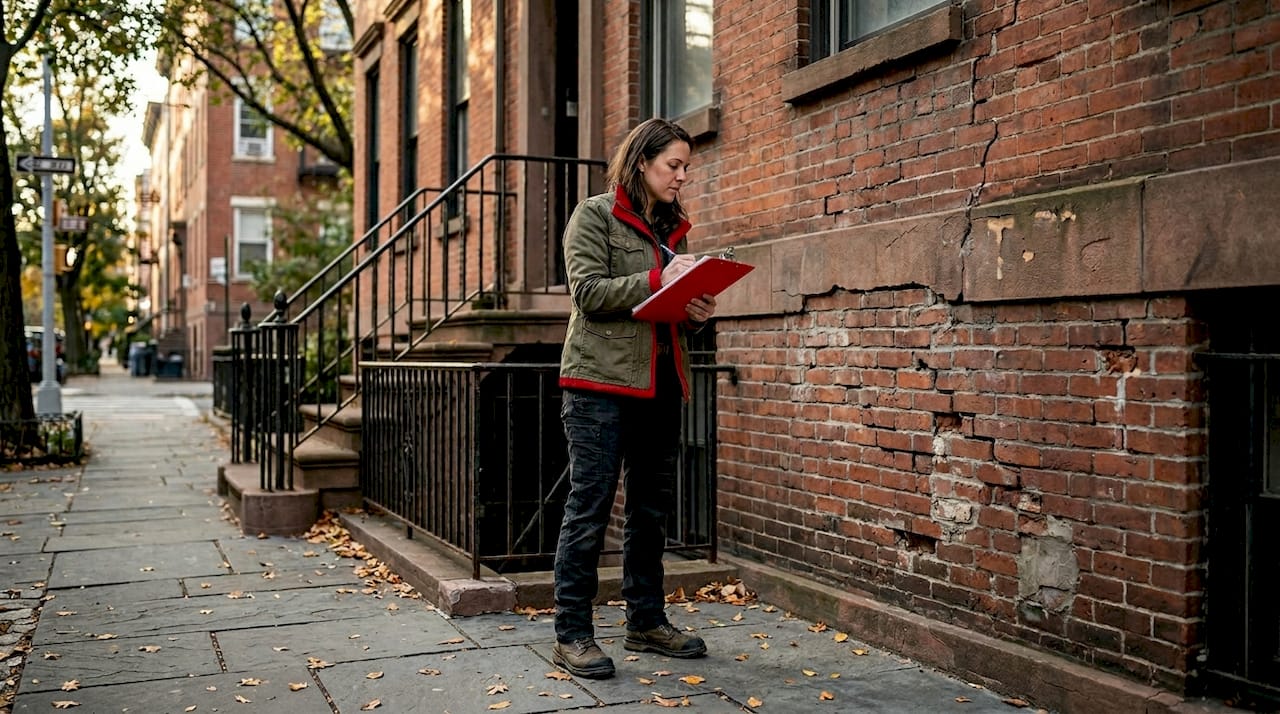
Before any renovation begins, you need a specialty inspection that covers:
| Inspection Area | What to Look For | Why It Matters |
|---|---|---|
| Roof and facade | Cracks, spalling brick, failed pointing | Water infiltration damages joists and plaster |
| Structural joists | Notching, rot, inadequate span | Affects load-bearing capacity and floor systems |
| Party walls | Gaps, movement, missing fire stopping | Code compliance and neighbor liability |
| Below-grade water | Efflorescence, active seepage, failed drainage | Foundation and finished basement risks |
| Mechanical systems | Undersized electrical, old plumbing stack | Capacity issues affect renovation scope and cost |
If your contractor starts work without addressing any of these areas, that’s a home improvement red flag worth pausing for. Sequencing errors compound the problem. Installing flooring before plumbing rough-in is a classic example that leads to $2,000 to $6,000 in rework costs and weeks of added delays.
Pro Tip: Hire a structural engineer or envelope specialist separately from your general contractor, especially for gut renovations in pre-war buildings. Their report gives you independent data and protects you if disputes arise mid-project.
4. Budget and timeline red flags to catch early
Budget overruns don’t usually happen all at once. They creep in through a pattern of small decisions that compound. Recognizing the early warning signs of a budget in trouble can save you tens of thousands of dollars.
Watch for these specific signals:
- Your contractor has not built a contingency into the estimate. Realistic Brooklyn brownstone renovations require 20 to 30 percent above the base cost for surprises, and any estimate without that buffer is incomplete.
- Custom cabinetry, specialty tile, and appliances have lead times of 12 to 20 weeks. If your contractor hasn’t confirmed these orders before demolition starts, your project will stall waiting for materials.
- Mid-project scope changes are being added verbally without updated pricing. Every change order should be written, priced, and signed before work proceeds.
- The contractor cannot tell you the current status of your permit applications or inspection scheduling. Projects stall most often due to permit delays, materials shortages, and mismanaged funding.
One number worth knowing: the 30 percent rule. For older Brooklyn row houses, experienced contractors typically expect that 30 percent of the total budget will go toward unforeseen conditions once walls open up. That’s not pessimism. That’s the reality of renovating 100-year-old buildings. If your budget doesn’t account for it, your project will.
Cash flow matters too. If a contractor starts slowing down or making excuses about scheduling, ask directly whether their subcontractors are being paid on time. A cash-strapped GC is one of the clearest renovation pitfalls in Brooklyn that homeowners don’t see coming until work stops entirely.
5. Communication and contract red flags
Poor communication is the root cause of most renovation disputes. The warning signs show up early, and they rarely improve on their own.
Here are five communication and contract red flags to take seriously:
- Vague scope of work. If your contract says “kitchen renovation” without specifying materials, dimensions, fixture models, and finish details, you have no basis for holding anyone accountable when the result doesn’t match your expectations.
- No written change order process. Detailed written contracts that cover scope, costs, and timelines prevent the disputes that derail projects. If your contractor resists putting changes in writing, that resistance is the red flag.
- Delayed responses to questions. A contractor who takes more than 24 to 48 hours to respond to basic questions during active construction is already showing you how they’ll handle problems.
- No scheduled inspection milestones. Inspections should be planned into the project schedule from day one. Contractors who treat inspections as an afterthought create bottlenecks that push timelines out by weeks.
- Subcontractor confusion. If you can’t get a clear answer about who is doing the electrical, plumbing, or tile work and when, that’s a sign the GC doesn’t have a firm handle on their own schedule.
Document every conversation that involves a decision, a change, or a commitment. A simple email summary after a phone call creates a record that protects both parties. The NYC co-op renovation checklist from Designsbydandj covers documentation practices that apply to all Brooklyn renovation types, not just co-ops.
My take on renovation red flags after years in Brooklyn
I’ve worked with Brooklyn homeowners long enough to know that most renovation disasters aren’t random. They’re predictable. The homeowners who get burned are almost always the ones who moved too fast on the contractor decision, or who trusted a verbal promise over a written contract.
Here’s what I’ve learned that most articles won’t tell you: the red flags aren’t always dramatic. They’re quiet. It’s the contractor who doesn’t ask enough questions about how you plan to use the space. It’s the estimate that arrives in 24 hours without a site visit. It’s the bid that skips line items you know should be there.
The current Brooklyn renovation climate demands more vigilance, not less. Labor is tight, timelines are longer, and the margin for error is thin. What I’ve found actually works is slowing down at the beginning. Spend more time on vetting, more time on contract review, and more time getting your permit strategy right before a single wall comes down. The homeowners who do that almost always have better projects. Not perfect projects, but better ones.
— D&J
Work with a team that knows Brooklyn renovations

Avoiding renovation red flags in Brooklyn starts with having the right team from day one. Designsbydandj is a family-owned design-build firm that manages permits, contractors, inspections, and timelines so you don’t have to chase down answers or wonder what’s happening next. We know Brooklyn’s building codes, its brownstone quirks, and the local trades worth trusting. Our design-build service keeps your project organized, on budget, and moving forward with clear communication at every step. Start with our free homeowner checklist to see exactly what to look for before your renovation begins, or reach out to schedule a consultation with our team.
FAQ
What permits are required for Brooklyn home renovations?
Most structural, electrical, plumbing, and HVAC work in Brooklyn requires permits from the NYC Department of Buildings. Unpermitted work can result in fines up to $10,000 plus daily penalties and stop-work orders.
How much deposit should I pay a Brooklyn contractor upfront?
New York State recommends contractor deposits between 10 and 33 percent of the total project cost. Requests for 50 percent or more upfront are a clear warning sign and may violate state contract law.
Why do Brooklyn renovations take longer than expected?
Labor shortages are the primary driver. Skilled trades are in short supply, and gut renovations now take three times longer than they did seven years ago. Materials lead times and permit processing add further delays.
What does a specialty inspection cover that a standard one doesn’t?
A specialty inspection for Brooklyn brownstones examines the building envelope, structural joists, party walls, below-grade water intrusion, and mechanical system capacity. Standard home inspections miss these renovation-critical issues entirely.
How do I protect myself if my contractor makes mid-project changes?
Require a written change order for every modification, signed by both parties before work proceeds. Detailed written contracts that document scope, cost, and timeline changes are the most reliable protection against disputes.
Recommended
- Bay Ridge Renovation Contractor | Designs by D and J – Designs by D and J
- How to Choose a Renovation Contractor in NYC: 10 Questions to Ask – Designs by D and J
- Flatbush Renovation Contractor | Designs by D and J – Designs by D and J
- Williamsburg Renovation Guide: Costs, Permits & What to Expect in 2026 – Designs by D and J