

Rent stabilization generally prevents renovations from being a quick path to higher rents. Cost recovery is possible, but only through specific statutory mechanisms like Major Capital Improvements (MCI) or Individual Apartment Improvements (IAI), and only when you follow strict procedural rules. Skip a filing, miss a consent form, or document costs loosely, and the increase you planned for may be reversed entirely.
Quick TL;DR:
- Confirm your local regulator first: in New York, that’s the Division of Housing and Community Renewal (DHCR) and the Rent Guidelines Board (RGB); in Los Angeles, it’s the Housing Department under LAMC Section 151.07.
- Document everything before, during, and after construction. Regulators expect itemized invoices, before-and-after photos, and signed contractor statements.
- Budget for amortization and non-recoverable costs. Large gut renovations rarely pay for themselves through rent increases alone, given current IAI lifetime caps and amortization rules.
- Hire a contractor experienced in regulated units, like Designsbydandj, who understands compliance paperwork from day one.
Table of Contents
- How does rent stabilization affect renovation decisions?
- What rent-increase mechanisms can you use after renovating?
- What procedural steps make a rent increase enforceable?
- How does rent stabilization change your renovation budget and ROI?
- How should you communicate with tenants during a regulated renovation?
- Pre-renovation checklist for rent-stabilized units
- What should you ask a contractor before hiring for a regulated unit?
- Key Takeaways
- A renovator’s perspective on regulated-unit projects
- Designsbydandj supports compliant renovations in regulated buildings
- Useful sources and further reading
How does rent stabilization affect renovation decisions?
Rent stabilization protects tenants from sharp rent increases by capping how much an owner can raise rents, and under what circumstances. In New York, the DHCR administers the Rent Stabilization Law; the RGB sets annual lease adjustment percentages. In Los Angeles, the Rent Adjustment Commission governs similar protections under the city’s rent ordinance.
The core trade-off is straightforward: tenant rent protection limits how much of your renovation cost you can pass through to rent. Economic research shows rent control helps current tenants in the short run but can reduce long-run housing quality and supply as owners face weaker investment incentives. That’s the policy logic behind narrowly defined recovery mechanisms.
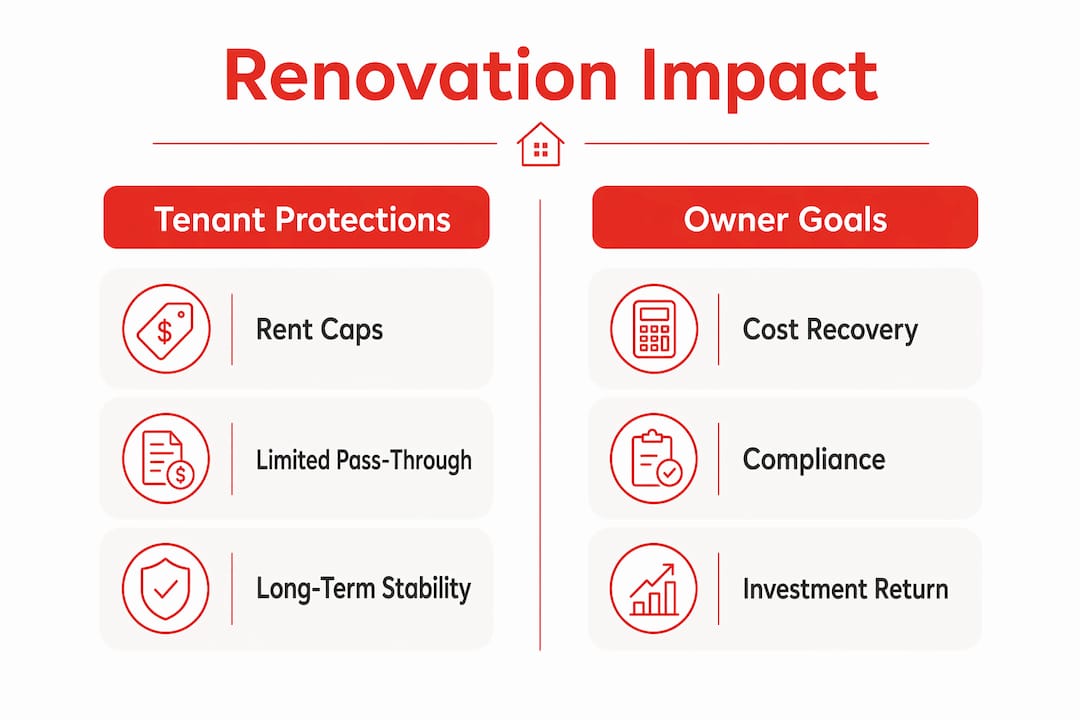
| Dimension | Tenant protection goal | Owner cost-recovery goal |
|---|---|---|
| Rent increases | Capped by RGB or local board | Recoverable only via MCI/IAI or approved programs |
| Improvement scope | Cosmetic upgrades generally excluded | Structural, mechanical, and habitability work eligible |
| Documentation | Tenant consent required for occupied IAIs | Itemized invoices, photos, contractor statements required |
| Penalties | Overcharge complaints, treble damages | Reversals, investigations, agency backlogs |
Pro Tip: Before you finalize any scope, pull your building’s rent registration history from the DHCR portal. Gaps or errors in registration can block an MCI application entirely, even after the work is done.
What rent-increase mechanisms can you use after renovating?
Three primary mechanisms let you recover renovation costs in a stabilized building.

Major Capital Improvements (MCI) cover building-wide work: boiler replacements, new plumbing, roofing, windows, and heating systems. Under HSTPA rules, MCI rent increases are capped at 2% per year per tenant and are temporary, expiring 30 years from the effective date. In buildings with 35 or fewer units, costs are amortized over 12 years; buildings with more than 35 units use a 12.5-year period.
Individual Apartment Improvements (IAI) cover work inside a specific unit. As of October 17, 2024, two tiers apply:
- Tier 1: Costs up to a specified limit. In smaller buildings, the rent increase is calculated as a fraction of the total improvement cost, capped at a moderate monthly amount. In larger buildings, a similar fractional calculation applies with a slightly lower cap. Tenant written consent is required for occupied units.
- Tier 2: Applicable only to vacant apartments after DHCR certification, with cost limits higher than Tier 1. Rent increases are calculated as fractions of total costs with monthly caps that differ by building size but are generally higher than Tier 1 caps.
Local programs like Los Angeles’s Primary Renovation Program allow cost recovery for major building-system work when owners submit an itemized application within 12 months of completion, comply with a Tenant Habitability Plan, and identify all grants or rebates that offset costs.
Example calculation (Tier 1 IAI, building with 35 or fewer units):
| Step | Figure |
|---|---|
| Amortization factor | 1/144th |
| Monthly rent addition | $144.44 |
| Monthly cap | $171.43 |
| Result | Increase is within cap; enforceable after DHCR filing |
Practitioner guidance is clear: large gut renovations rarely pay for themselves through rent increases alone given current IAI lifetime caps and amortization rules. Treat major projects as long-term asset preservation, not near-term rent-roll enhancements.
What procedural steps make a rent increase enforceable?
Filing correctly is not optional. DHCR requires owners to submit specific forms, supporting documentation, and tenant notices before any increase becomes collectible.
Typical procedural sequence:
- Confirm building eligibility (no outstanding hazardous violations for MCI applications).
- File DHCR IAI Notification Form RN-19N electronically with before-and-after photos for IAIs.
- Obtain tenant written consent on Form RN-19C for occupied-unit Tier 1 IAIs.
- For MCIs, file a full application with DHCR; the agency issues an order served on both owner and tenants.
- The approved MCI increase becomes collectible on the first day of the first month 60 days after the DHCR order is issued. No retroactive increases are permitted.
- Register the apartment annually with DHCR; gaps in registration history can invalidate increases.
Penalties for noncompliance are serious. Tenants can file overcharge complaints covering the prior six years. In cases of willful overcharge, treble damages may apply. DHCR backlogs mean disputes can drag on for months, affecting your cashflow well beyond the renovation itself.
Pro Tip: Build a single project file from day one: dated before-and-after photos, itemized invoices, contractor statements, permits, and all tenant communications. That file is your primary defense against a regulatory reversal.
How does rent stabilization change your renovation budget and ROI?
The D.C. Policy Center’s literature review confirms that rent stabilization can reduce owner incentives to invest, shifting capital toward for-sale conversions or away from rental housing entirely. For owners who do invest, the financial math requires a realistic reset.
Budgeting rules for regulated-unit renovations:
- Allocate a compliance line item covering legal review, DHCR filing fees, and administrative time. Backlogs are real, and practitioner guides recommend planning cashflow around extended timelines.
- Budget for non-recoverable portions. Cosmetic upgrades, luxury finishes, and amenity items are generally ineligible for pass-through.
- Include a contingency for scope changes triggered by code compliance findings during construction.
When a project still makes sense:
- Safety and habitability work (required by code, often MCI-eligible).
- Energy-efficiency upgrades that reduce operating costs regardless of rent recovery.
- Structural repairs that protect long-term asset value.
- Pre-sale improvements where market value gain exceeds the non-recoverable renovation cost.
Pro Tip: Split your scope into two buckets: code-critical and structural items (eligible for MCI/IAI recovery) and amenity upgrades (owner-funded). Price each separately so you know exactly what you’re recovering and what you’re absorbing.
How should you communicate with tenants during a regulated renovation?
Tenant grievances carry real weight with regulators. Proactive communication materially reduces the risk that a complaint delays or derails your filing. Good communication practices also reduce the chance of disputes escalating to formal proceedings.
Tenant communication checklist:
- Provide written notice of planned work at least 30 days in advance, stating scope, expected timeline, and any rent-change implications.
- For occupied IAIs, deliver DHCR Form RN-19C and allow adequate time for the tenant to review and sign.
- Document every communication: date, method, content, and tenant response.
- Designate a single point of contact for tenant questions throughout the project.
- For disruptive work, offer temporary accommodations or phased scheduling where feasible.
Pro Tip: Keep a running log of all tenant interactions, even informal ones. If a grievance is filed, a dated communication record shows regulators you acted in good faith.
Pre-renovation checklist for rent-stabilized units
Complete every item on this list before construction starts.
Legal and regulatory pre-checks:
- Confirm the unit’s rent-stabilization status and current legal rent via DHCR records.
- Review your building’s permit requirements and any landmark or building-level rules that add compliance layers.
- Identify which improvements qualify for MCI or IAI recovery under current DHCR rules.
Documentation steps:
- Pull the current rent roll and full registration history.
- Take dated before photos of every area to be renovated.
- Obtain contractor estimates with line-item costs separating recoverable from non-recoverable work.
- Collect copies of all permits before work begins.
Financing and budgeting:
- Model the amortized monthly rent addition against your total spend to confirm the project pencils.
- Reserve a compliance and legal budget separate from construction costs.
- Check for grants, tax credits, or energy rebates that must be disclosed to regulators and may reduce recoverable costs.
Pro Tip: Get a regulatory read from an attorney experienced in rent stabilization before committing capital. A one-hour consultation can prevent a six-month DHCR dispute.
What should you ask a contractor before hiring for a regulated unit?
Not every contractor understands regulated-unit compliance. Hiring the wrong one creates documentation gaps that can cost you the rent increase you planned for.
Contractor qualification checklist:
- Experience with rent-stabilized projects and familiarity with DHCR IAI/MCI filing requirements.
- Ability to provide line-item invoices separable by improvement category.
- Licensed, insured, and able to pull permits in your jurisdiction.
- References from prior regulated-unit projects.
Interview questions to ask:
- Can you describe a recent project in a rent-stabilized building and how you handled the documentation?
- How do you separate recoverable from non-recoverable costs in your invoicing?
- Who is responsible for permit filings and DHCR notification forms on your projects?
- How do you communicate with tenants during active construction?
What to require in the contract:
- Scope broken into separable line items by improvement type.
- A documentation handover clause: all invoices, photos, and permits delivered to the owner at project close.
- Clear assignment of permit and filing responsibilities.
- A dispute-resolution clause covering scope changes.
Designsbydandj works with owners of two-family homes and multi-unit buildings across Brooklyn and NYC, structuring scopes to separate recoverable improvements from owner-funded work and delivering a complete documentation packet at project close. That packet has helped owners avoid DHCR reversals on structural and mechanical improvements.
Pro Tip: Ask every contractor for a sample documentation packet from a past regulated-unit project. If they can’t produce one, that tells you everything you need to know.
Key Takeaways
Rent stabilization limits rent-driven ROI and makes procedural compliance, not just construction quality, the deciding factor in whether your renovation investment is recoverable.
| Point | Details |
|---|---|
| Check regulator filings first | Confirm DHCR registration status and building eligibility before committing to any scope. |
| Document everything | Before-and-after photos, itemized invoices, and tenant consents are required, not optional. |
| Budget for non-recoverable costs | Cosmetic and luxury upgrades are generally ineligible; model amortized recovery against total spend. |
| Communicate early with tenants | Written notice and documented consent reduce grievance risk and protect your filing. |
| Hire a compliance-experienced firm | Designsbydandj structures scopes, handles documentation, and delivers a complete filing packet at project close. |
A renovator’s perspective on regulated-unit projects
The conventional wisdom is that rent stabilization simply makes renovation less worthwhile. That framing misses the point. The real issue is that owners often approach regulated-unit projects with the same ROI logic they’d apply to a market-rate building, then feel blindsided when amortization caps and filing requirements compress the return.
The smarter frame is this: treat the recoverable portion as a bonus, not the business case. If a boiler replacement or new plumbing qualifies for MCI recovery, that’s a meaningful long-term rent adjustment. But the primary reason to do the work is habitability, code compliance, and asset preservation. Owners who build their project economics around the rent increase alone tend to cut corners on documentation, skip the legal review, and then spend far more fighting a DHCR reversal than the filing would have cost.
Compliance-first scoping also changes how you hire. A contractor who can’t produce line-item invoices by improvement category is not the right partner for a regulated unit, regardless of their price. The documentation is the product, as much as the finished work.
Designsbydandj supports compliant renovations in regulated buildings
Renovating a rent-stabilized unit requires more than skilled construction. It requires a firm that treats paperwork as part of the project, not an afterthought. Designsbydandj is a family-owned design-build firm serving homeowners across NYC and Brooklyn, with direct experience in two-family homes and multi-unit buildings where DHCR compliance is part of every project kickoff.

Every project starts with a pre-filing scope review that separates recoverable improvements from owner-funded work. Construction is phased to minimize tenant disruption, and the documentation packet, including before-and-after photos, itemized invoices, and permit copies, is delivered at project close so your DHCR filing is ready to submit. If you’re planning a renovation in a rent-stabilized building, schedule a consultation with Designsbydandj to get a clear scope, honest timeline, and a compliance plan built in from day one.
Useful sources and further reading
- NYS HCR: IAI and MCI Improvements — Official DHCR guidance on IAI tiers, tenant consent forms, and MCI application procedures. Best for procedural and filing details.
- DHCR Fact Sheet 26 (July 2025) — Current IAI caps, amortization factors, and MCI phase-in rules. Best for calculation reference.
- NYC Landlord Renovation Laws | BBG — Practitioner legal guide covering documentation requirements, filing risks, and enforcement. Best for compliance checklists.
- D.C. Policy Center: Rent Control Literature Review — Empirical policy review on rent stabilization’s effects on housing quality and owner incentives. Best for policy context.
- Brookings: Effects of Rent Control — Economic research summary on short- and long-run rent control effects. Best for understanding the regulatory trade-off.
- LA Housing Department: Primary Renovation Program — Los Angeles cost-recovery regulations for major building-system renovations. Best for non-NYC jurisdictions.
- Rental code violations and portfolio acquisition — Practical guide on code compliance risks affecting renovation feasibility and due diligence.
This article is general information, not legal or regulatory advice. Confirm current rules with DHCR, your local rent board, or a qualified attorney before making renovation or filing decisions.