

A party wall is a shared boundary wall between two adjoining Brooklyn properties that legally binds both neighbors to coordinate on any renovation work affecting it. In Brooklyn’s dense rowhouses and brownstones, nearly every gut renovation touches a party wall in some way. Understanding how party wall affects renovation Brooklyn projects is not optional. It determines your timeline, your budget, and your legal exposure before a single permit gets filed.
Party wall agreements, governed by New York state property law and NYC Building Code, set the rules for who can do what, when, and at whose expense. Without proper notifications and agreements, renovation work affecting party walls can lead to neighbor disputes, fines, and project delays. That outcome is avoidable when you know the rules before construction starts.
How party wall agreements regulate renovation approvals in Brooklyn
A party wall agreement is a recorded legal document that defines each neighbor’s rights and responsibilities regarding a shared wall. Your first step before any renovation is to search NYC’s Automated City Register Information System, known as ACRIS, for any recorded party wall agreements tied to your property. Brooklyn homeowners must verify recorded agreements via ACRIS before closing or renovating, because absent recorded documents, default New York state law governs renovation rights. Default rules often differ significantly from what neighbors expect, which is where disputes begin.

When a recorded agreement exists, it typically spells out notice periods, consent requirements, and dispute resolution steps. When no agreement is recorded, you still carry legal obligations under New York property law. Those obligations include serving a formal party wall notice to your neighbor before starting any work that affects the shared wall.
Key notification requirements include:
- Written notice served to the adjoining owner before construction begins, describing the planned work in detail
- Adequate lead time giving your neighbor enough time to review, consult a professional, and respond
- Documented consent or objection from the neighbor, which determines whether you can proceed or must negotiate
- Dispute resolution steps if the neighbor objects, which may involve a surveyor or legal proceedings
- Record keeping of all notices, responses, and agreements throughout the project
Improper or missing party wall notices can cause neighbor objections and legal challenges, potentially stalling renovation projects for weeks or months. That delay costs money and goodwill with the people living next door.
Pro Tip: Before you hire an architect or contractor, pull the ACRIS records for your property yourself. It takes under 30 minutes and tells you exactly what legal framework governs your shared wall before anyone else gets involved.
What do the 2025 amendments to NY RPAPL 881 mean for Brooklyn renovations?
The legal landscape for party wall renovations in Brooklyn shifted significantly at the end of 2025. December 2025 amendments to NY RPAPL 881 and new Section 882 enable courts to grant access to adjoining properties for permanent supports such as anchors, underpinning, and tie-backs during renovations. Previously, courts could only authorize temporary access. This change is significant for any Brooklyn homeowner planning foundation work or structural upgrades near a shared wall.
Here is what the amendments mean in practical terms:
- Court-ordered permanent encroachments are now possible. A developer or homeowner can petition a court to install permanent structural supports on a neighbor’s property if required by code or engineering necessity.
- Neighbor consent is no longer the final word. If a neighbor refuses access for legally required structural work, a court can override that refusal under the amended statute.
- Dispute risk increases for both sides. Neighbors who previously felt protected by withholding consent now face court proceedings. Renovating homeowners face the cost and delay of litigation if negotiations fail.
- NYC Building Code Section 3309.4 still applies. Section 3309.4 mandates protecting adjacent structures during excavation and foundation work, including providing licenses to enter neighboring properties for such work. The 2025 amendments complement rather than replace this requirement.
- Planning timelines must account for legal proceedings. If your renovation requires underpinning or anchors near a party wall and your neighbor objects, budget additional months for a court process.
The practical implication is clear. Brooklyn homeowners planning structural renovations near shared walls now operate in a more legally complex environment than they did even one year ago. Getting an attorney involved early is no longer a precaution. It is a project management requirement.
Who pays for what when a party wall renovation affects both neighbors?
Cost responsibility on party wall renovations follows a straightforward principle in New York property law. Costs for party wall repairs benefiting both parties are often shared equally, while improvements that benefit only one party are borne by that party alone. That rule sounds simple, but its application in real Brooklyn renovations gets complicated fast.
Consider a common scenario: you want to underpin the foundation of your brownstone to add a basement level. The underpinning strengthens the shared wall, which technically benefits your neighbor too. But the improvement is driven entirely by your project. Courts and surveyors in New York have historically split these costs based on the degree of benefit each party receives.
Common renovation scenarios that raise party wall cost questions include:
- Underpinning and foundation deepening near or beneath a shared wall
- Opening new doorways or windows in a party wall, which weakens its structural integrity
- Adding load to a party wall by building additional floors or heavy structural elements
- Waterproofing or repointing the shared wall face, which benefits both properties
- Installing new beams or lintels that bear on the party wall
NYC Building Code requires protection of adjoining property during soil or foundation work, with reciprocal license provisions if access is denied. That means your obligation to protect your neighbor’s structure is not negotiable, regardless of who pays for it.
Pro Tip: Commission a structural engineering assessment before you finalize your renovation scope. A licensed structural engineer can identify exactly which elements of your project affect the party wall, giving you a defensible basis for cost allocation conversations with your neighbor.
Structural work near a shared wall also requires coordination with the NYC Department of Buildings. Your contractor must file the correct permits and, in landmark districts, coordinate with the Landmarks Preservation Commission as well. Skipping either step exposes you to stop-work orders that cost far more than the permit fees themselves.
What steps should Brooklyn homeowners take before renovating near a party wall?
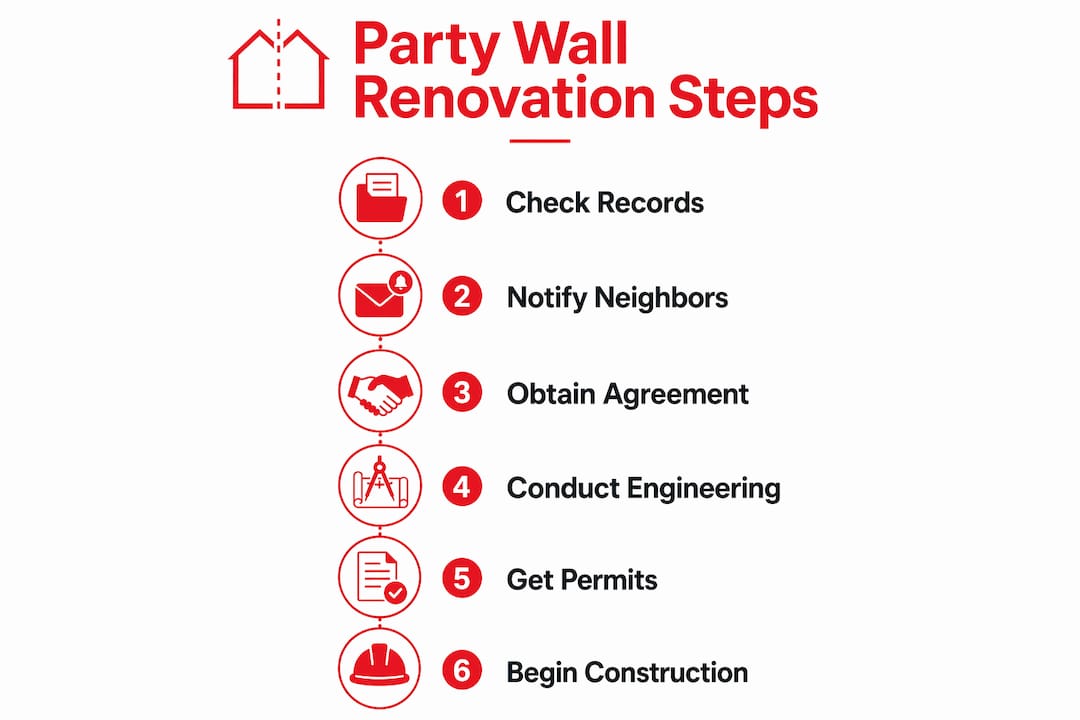
Preparation is the single biggest factor in whether a party wall renovation goes smoothly or turns into a dispute. The steps below apply whether you are buying a Brooklyn brownstone or planning a renovation on a property you already own.
- Search ACRIS before closing. Pull all recorded documents tied to the property, including party wall agreements, easements, and prior survey records. Skipping party wall legal reviews during closing leaves buyers exposed to costly liabilities when renovation begins. This is one of the most common and expensive mistakes Brooklyn buyers make.
- Hire a real estate attorney with Brooklyn experience. Have the attorney review any recorded agreements and advise on your rights and obligations under current New York law, including the 2025 RPAPL amendments.
- Commission a structural engineering assessment. Before filing any permits, understand exactly how your planned work interacts with the shared wall. This assessment becomes the foundation of your party wall notice.
- Serve formal party wall notices. Issue written notice to your adjoining neighbor with full details of the planned work. Keep copies of everything. If your neighbor consents in writing, attach that consent to your permit application.
- File permits with the NYC Department of Buildings. Your contractor or architect files the necessary permits, referencing the party wall agreement and neighbor consent where applicable. In historic districts, add an LPC application to your checklist.
- Maintain open communication with your neighbor throughout construction. Share your construction schedule, introduce your site supervisor, and give advance notice before any work that generates significant noise or vibration.
The neighbor notification process is not just a legal formality. It is the most effective tool you have for preventing disputes before they start. Neighbors who feel informed and respected rarely escalate to legal action.
Pro Tip: If your neighbor is hesitant about your renovation plans, offer to share the structural engineering report with them. Showing the technical basis for your work builds confidence and often resolves concerns faster than any legal notice can.
For a broader look at how structural work shapes your renovation, the scope of party wall obligations connects directly to foundation choices, beam placement, and load path decisions throughout the project.
Key Takeaways
Party wall compliance in Brooklyn requires legal due diligence, formal neighbor notification, and structural engineering review before any renovation work begins near a shared wall.
| Point | Details |
|---|---|
| Search ACRIS first | Verify recorded party wall agreements before closing or starting any renovation work. |
| Serve formal notices | Written party wall notices to neighbors are legally required before construction affecting shared walls. |
| 2025 RPAPL amendments matter | Courts can now order permanent structural access to adjoining properties, changing neighbor negotiation dynamics. |
| Cost sharing follows benefit | Repairs benefiting both parties split costs equally; improvements for one party are that party’s expense. |
| Engineering review is non-negotiable | A structural assessment before filing permits protects you legally and financially throughout the project. |
What we’ve learned from Brooklyn party wall projects
Party wall issues are where well-planned Brooklyn renovations go sideways most often. We have seen homeowners lose months of schedule and tens of thousands of dollars because they assumed a verbal agreement with a neighbor was enough. It never is. The legal framework exists precisely because neighbors’ interests diverge the moment construction starts.
The 2025 amendments to RPAPL 881 are a double-edged change. They give renovating homeowners more legal recourse when neighbors refuse necessary structural access. But they also raise the stakes for everyone involved, because disputes that once ended in negotiation can now end in court. The homeowners who navigate this environment best are the ones who treat legal and engineering due diligence as the first phase of their renovation, not an afterthought.
Transparent communication with neighbors is not just good manners. It is the most cost-effective risk management tool available. A neighbor who understands your project timeline, knows your contractor’s name, and has seen the engineering report is far less likely to file an objection or call 311 during construction. We have watched that dynamic play out on project after project in Brooklyn.
The renovation should feel exciting. Getting there requires doing the groundwork that most homeowners skip because it feels slow or overly cautious. It is neither. It is the foundation of a project that finishes on time and on budget.
— D&J
Designsbydandj handles the complexity so you don’t have to
Party wall renovations in Brooklyn involve legal research, neighbor coordination, structural engineering, and permit filing, all before a single wall comes down. Designsbydandj manages every one of those steps as part of our integrated design-build remodeling process for NYC homeowners.

We know Brooklyn’s attached housing stock, its permit requirements, and the neighbor dynamics that come with renovating in dense neighborhoods. Our team coordinates directly with structural engineers, attorneys, and the NYC Department of Buildings so you have one clear point of contact throughout. If you are planning a renovation that touches a shared wall, reach out to Designsbydandj for a consultation. We will walk you through the scope, the timeline, and what your neighbors need to know before work begins.
FAQ
What is a party wall in Brooklyn real estate?
A party wall is a shared boundary wall between two adjoining properties, common in Brooklyn rowhouses and brownstones. Both property owners hold legal rights and responsibilities regarding that wall.
Do I need a party wall agreement before renovating in Brooklyn?
You must check for an existing recorded agreement via NYC ACRIS before starting any renovation affecting a shared wall. If no agreement exists, New York state law still requires formal neighbor notification before construction begins.
What changed with the 2025 RPAPL 881 amendments?
The december 2025 amendments allow courts to order permanent structural access to adjoining properties for supports like underpinning and anchors. This means a neighbor’s refusal to grant access can now be overridden by a court order.
Who pays for party wall repairs in Brooklyn?
Repairs that benefit both adjoining owners are typically split equally. Work that benefits only the renovating homeowner is that homeowner’s full financial responsibility.
Can a neighbor stop my Brooklyn renovation over a party wall dispute?
A neighbor can object and trigger a legal process, but a court can ultimately authorize necessary structural work even without neighbor consent under the amended RPAPL 881. Proper notification and documentation significantly reduce the risk of a successful objection.