
A Brooklyn renovation contractor payment schedule is a contractually defined sequence of payments tied to verified project milestones or time intervals that protects your investment from start to finish. Without one, you hand over financial control before the work earns it. Brooklyn homeowners face specific risks here: gut renovations in neighborhoods like Cobble Hill or Williamsburg can run well into six figures, NYC Department of Buildings inspections create natural payment checkpoints, and New York lien laws give unpaid subcontractors up to 90 days to file claims against your property. Understanding the standard industry terms, deposits, draws, retainage, and lien waivers, puts you in a far stronger position before you sign anything.
What payment schedule models do brooklyn contractors use?
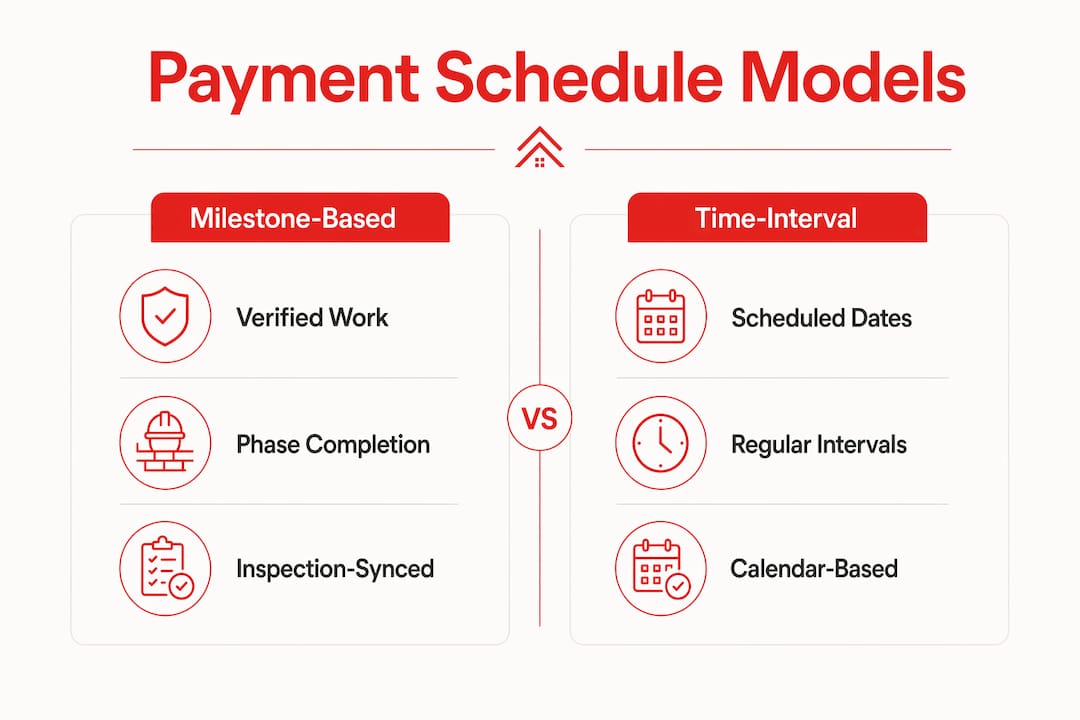
Milestone-based payment schedules tie each payment to a verified phase of work rather than a calendar date. Common milestones include demolition completion, rough-in work (plumbing, electrical, HVAC), drywall installation, and finish work. This model is preferred for fixed-scope projects like kitchen remodels because payments align directly with verified outputs.

Time-interval billing, by contrast, releases funds on a set schedule regardless of exact phase completion. Milestone-based billing suits fixed-scope projects while time-interval billing fits evolving-scope or cost-plus contracts where the full scope shifts as work progresses. Knowing which model your contractor proposes tells you a lot about how they manage accountability.
Here is how the two main models compare:
| Feature | Milestone-Based | Time-Interval |
|---|---|---|
| Payment trigger | Verified work phase complete | Elapsed time or percentage |
| Best for | Fixed-scope projects | Cost-plus or evolving scope |
| Homeowner control | High | Moderate |
| Dispute risk | Lower | Higher |
| NYC DOB alignment | Strong | Weaker |
For smaller projects under $50,000, a simplified three-draw schedule works well: deposit, mid-project draw, and final payment. Larger gut renovations in Brooklyn typically require five or more draws. Typical Brooklyn gut renovations feature an initial deposit of 10% or less, milestone draws at demolition, rough-in, and substantial completion, plus retainage held until final inspection sign-off.
NYC DOB inspections are a built-in advantage for Brooklyn homeowners. Rough plumbing and electrical phases require passed inspections before walls close. Scheduling payment releases around those inspection approvals means a third party has already verified the work.
How do you negotiate a fair contractor payment plan?
Start with a written scope of work before any payment discussion begins. A vague scope leads to vague payment terms, and vague payment terms lead to disputes. Every draw should reference a specific, observable deliverable.
Follow these steps to build a payment plan that protects you:
- Cap the deposit at 10% or less. A deposit covers real startup costs like material orders and permit fees. Anything higher than 10% shifts financial risk onto you before work begins.
- Tie every draw to a named milestone. Write it into the contract: “Payment 2 releases upon completion of rough-in electrical and passed NYC DOB inspection.” No inspection pass, no payment.
- Hold 5–10% as retainage. Retainage held until punch list completion incentivizes your contractor to finish every last detail. It is your most effective tool for ensuring thorough completion.
- Require lien waivers at every payment. Collect a partial conditional lien waiver with each draw and an unconditional final lien waiver at the last payment. This protects you from claims by unpaid subcontractors and suppliers.
- Write a change order process into the contract. Any scope or cost change must be documented in writing and signed before work proceeds. Verbal agreements on changes are where renovation budgets collapse.
- Define payment release timelines. Specify how many days after milestone verification you will release payment, typically 3–5 business days. Also define consequences if the contractor misses a milestone deadline.
Pro Tip: Ask your contractor to provide a draw request form for each payment. It should include photos, a description of completed work, and any relevant inspection approvals. This creates a paper trail that protects both parties.
Understanding your role as a client in the renovation process makes negotiating these terms far less intimidating. You are not being difficult by asking for documentation. You are being responsible.
What legal protections do brooklyn homeowners have?
New York’s mechanic’s lien law gives contractors, subcontractors, and suppliers a hard deadline. Contractors must file lien notices within 90 days of last providing work or materials, or they permanently lose their lien rights. That 90-day window applies statewide and does not extend for any reason.
The risk this creates is real. You could pay your general contractor in full, believe the project is closed, and then receive a lien notice from a tile supplier or electrician your contractor never paid. Your property is now encumbered. That is why payment structure matters beyond just managing cash flow.
Key legal protections to build into your contract:
- Partial conditional lien waivers at every draw payment, signed by the contractor and any major subcontractors
- Unconditional final lien waiver at the last payment, confirming all parties have been paid in full
- Sworn statements from your contractor listing all subcontractors and suppliers before you release the final draw
- Explicit contract language stating that final payment does not constitute waiver of any rights unless a signed lien waiver is provided
Courts do not infer lien waivers from final payment alone without explicit contractual terms. This is a critical point that many homeowners miss.
“Requiring lien waivers throughout project stages is the single most effective way to protect your property from claims by parties you never directly hired.” — Brooklyn construction law practice guidance
Legal experts in Brooklyn recommend obtaining conditional lien waivers at each draw to avoid hidden liabilities. If your contractor resists providing them, treat that as a serious warning sign. Review the renovation red flags Brooklyn homeowners should know before signing any contract.
How do you verify milestones before releasing payments?
Verification is where many homeowners lose money. Releasing a draw based on a contractor’s word rather than documented proof is the most common payment mistake in Brooklyn renovations.
Build a verification process around these practices:
- Schedule walkthroughs before every draw. Walk the site with your contractor and compare actual conditions to the milestone description in your contract. Take dated photos and keep them in a shared folder.
- Tie payments to NYC DOB inspection passes. Linking payment releases to passed DOB inspections for rough plumbing and electrical protects you from costly rework after walls close. The inspection record is public and verifiable.
- Use a punch list at substantial completion. Before releasing the final draw minus retainage, create a written punch list of all incomplete or deficient items. Payment of retainage releases only after every item is resolved.
- Hire a third-party inspector for larger projects. Professional third-party inspections or an owner’s representative add an objective layer of verification on complex renovations. The cost is typically 1–2% of the project budget and is almost always worth it.
Pro Tip: Use a free project management app like Buildertrend or CoConstruct to track milestone status, store photos, and log communications. Having everything in one place prevents the “I thought you said” disputes that derail projects.
Industry specialists advise aligning payment triggers with NYC DOB inspection passes to leverage third-party verification and reduce risk. This approach turns a bureaucratic requirement into a financial safeguard.
For projects involving electrical upgrades, the NYC electrical renovation process follows a phase-based structure that maps directly onto milestone payment triggers.
Key takeaways
A structured Brooklyn renovation contractor payment schedule, built around milestones, lien waivers, and NYC DOB inspections, is the most reliable way to protect your money and keep your project on track.
| Point | Details |
|---|---|
| Cap deposits at 10% | Never pay more than 10% upfront; deposits should only cover real startup costs. |
| Tie draws to milestones | Each payment must reference a specific, verifiable deliverable or passed inspection. |
| Hold 5–10% retainage | Retainage withheld until punch list completion keeps contractors accountable to the finish. |
| Require lien waivers | Collect partial waivers at every draw and an unconditional final waiver at project close. |
| Verify before you pay | Use walkthroughs, DOB inspection records, and photo documentation before releasing any draw. |
What we’ve learned about payment schedules after years in brooklyn
After working on gut renovations, kitchen remodels, and full-floor buildouts across Brooklyn, the pattern is consistent. The projects that go smoothly are the ones where the payment schedule was treated as seriously as the design plan.
The most common mistake we see is homeowners agreeing to a large upfront deposit because a contractor says materials need to be ordered immediately. A 10% deposit is standard and sufficient. If a contractor needs 30–40% before breaking ground, that is a financial red flag, not a materials issue.
Lien waivers are the other area where homeowners consistently leave themselves exposed. Most people assume that paying the general contractor closes the loop. It does not. Your GC may have outstanding invoices with their electrician, plumber, or tile supplier. Without a signed lien waiver, those parties can file against your property even after you have paid in full.
The advice we give every client: get the contract reviewed by a New York construction attorney before signing. The cost is a few hundred dollars. The protection is worth far more than that on a six-figure renovation. A well-written contract with clear payment milestones, lien waiver requirements, and a change order process is not just paperwork. It is the foundation of a project that finishes on time, on budget, and without legal surprises.
— D&J
How Designsbydandj handles payment scheduling for brooklyn clients
Renovation should feel exciting, not stressful. At Designsbydandj, we build every project around a clear, written payment schedule tied to verified milestones from day one. Our clients always know what triggers the next payment, what documentation we provide, and what protections are in place.

We handle the full scope: scope of work, permit coordination with NYC DOB, milestone tracking, and lien waiver collection at every stage. Whether you are planning a kitchen remodel in Cobble Hill or a full gut renovation in Williamsburg, our process keeps your budget protected and your project moving. Start by reading our guide to hiring a design-build contractor in New York, or explore our Brooklyn renovation services to see how we work.
FAQ
What is a standard deposit for a brooklyn renovation contractor?
A standard deposit for a Brooklyn renovation contractor is 10% or less of the total project cost. Deposits above that percentage shift financial risk to the homeowner before meaningful work begins.
How many payment draws are typical for a brooklyn gut renovation?
Most Brooklyn gut renovations use five or more draws tied to phases like demolition, rough-in, drywall, finishes, and final completion. Smaller projects under $50,000 often use a simplified three-draw structure.
What is a lien waiver and why does it matter?
A lien waiver is a signed document from your contractor or subcontractor confirming they have been paid and waive their right to file a mechanic’s lien against your property. Without one, unpaid subcontractors can file claims against your home even after you pay the general contractor in full.
When should i hold retainage on a renovation project?
Hold 5–10% of the total contract value as retainage until all punch list items are complete and you have received a final unconditional lien waiver. Releasing retainage early removes your strongest incentive for thorough project completion.
Can NYC DOB inspections serve as payment triggers?
Yes. Passed NYC DOB inspections for rough plumbing and electrical work are reliable, third-party verified milestones. Tying payment releases to those inspection approvals protects you from paying for work that has not been officially approved.